Retrofit insulation for doors in good condition, and a straight answer when a factory-insulated door is the smarter spend. We quote both, you choose.
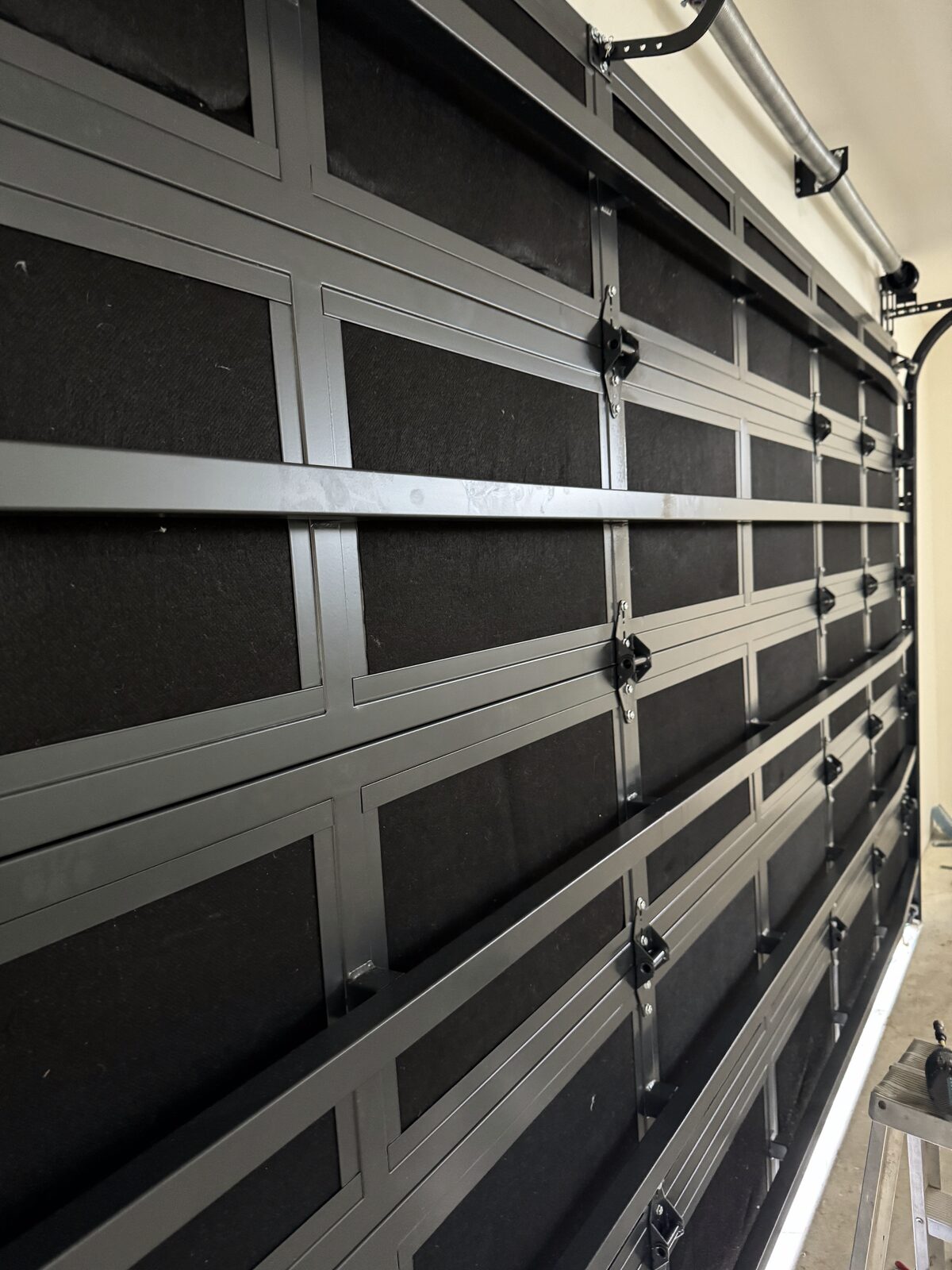
Two routes. Retrofit: rigid insulation panels fitted to your existing door's inner face, with springs re-tensioned for the extra weight, reaching around R-1.0, best for doors in good condition. Replace: a factory-built insulated door with a PUR core and full perimeter seals, nominal R-2.0, roughly double the performance. Which makes sense depends on your door's age and condition; we assess it honestly and quote both.
Both options work. Which is the better spend depends on the condition of the door you already have, so this is the comparison we walk through at the measure.
| Retrofit insulation | Factory-insulated door | |
|---|---|---|
| Thermal performance | Around R-1.0, with gaps at the panel edges | R-2.0 nominal, full coverage plus perimeter seals |
| Noise reduction | Moderate | Significant, from the foam core and nylon rollers |
| Weight and balance | Adds weight; the springs have to be re-tensioned to suit | Engineered and balanced as one system |
| Warranty | On the panels and the fitting | 5 years across the whole door |
| Best when | The existing door is sound and the opening is fine | The door is near the end of its life anyway |
We quote both so you can see the difference rather than take our word for it. For indicative market ranges, see the garage door insulation guide.
Panel fitting is the easy half. Ours includes spring re-tensioning for the new weight, opener force re-calibration, and a bottom-seal check, the steps that protect your motor and make the insulation actually work.
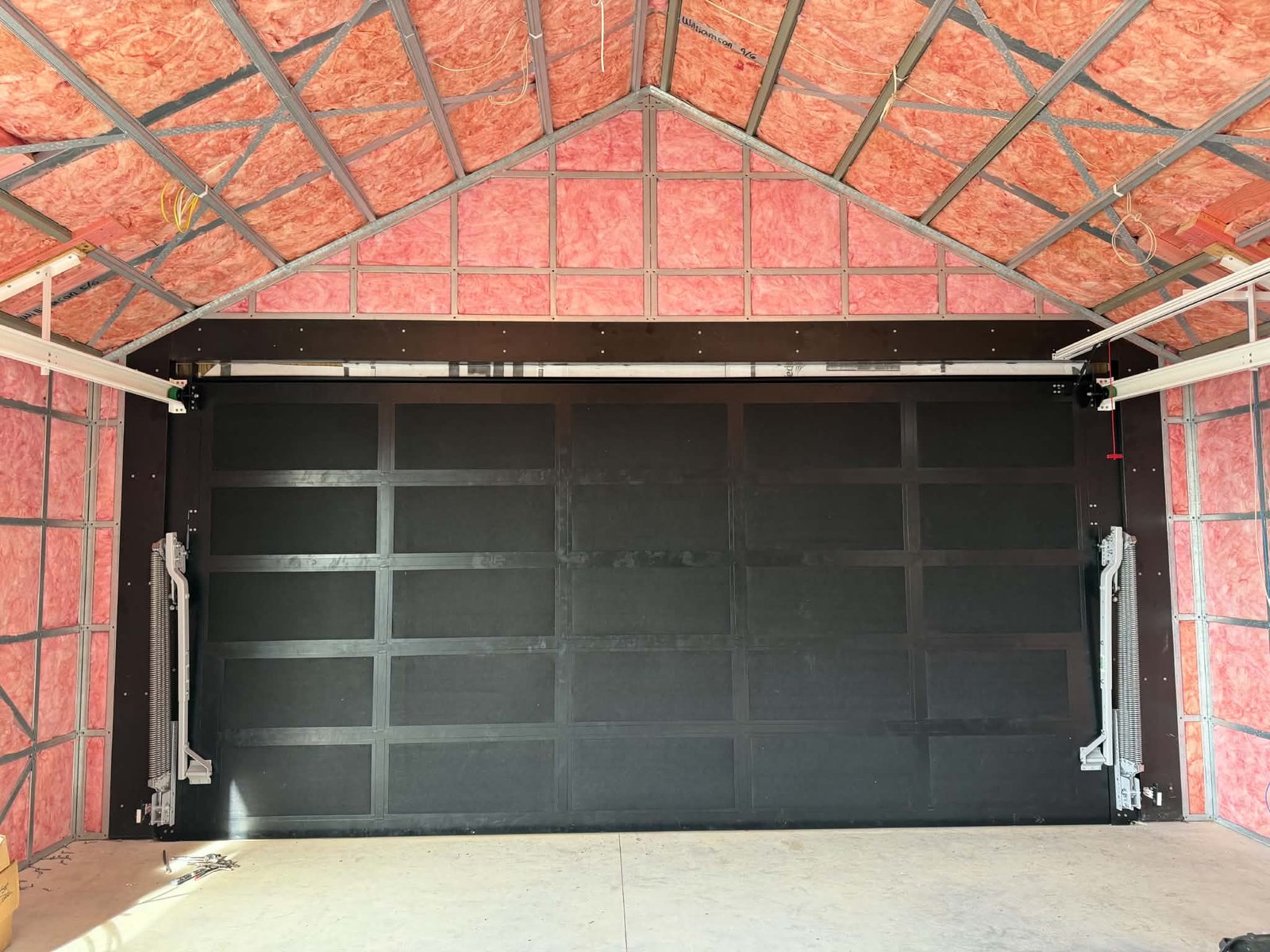
It depends entirely on the garage. On an attached garage, one with a room above it, or one used as a gym, office or workshop, an insulated door makes a clear difference to comfort, condensation and noise. On a detached shed where the walls and roof are uninsulated single skin, insulating only the door achieves very little, because the heat transfer simply moves to the other surfaces.
A garage door is usually the largest single panel in the building envelope, so it is the biggest heat path. Adding a garage door insulation panel puts a thermal barrier across that opening: less heat in through a west-facing door in summer, less heat out of the house in winter, and far less condensation forming on the inside face on a cold morning. The energy saving is real but modest, and it reaches the house only where the garage is attached and the internal access door is reasonably sealed. We do not publish a cooling cost or a payback figure, because it depends on your building rather than the door.
Yes. Hardware stores and online retailers sell garage door insulation kits: polystyrene or polyester fibre batts cut to panel size, or foil-faced boards you fix to the inside face. A DIY installation is genuinely possible on a sectional door. The catch is not the fitting, it is the weight, because the springs on your door were balanced for a door without it.
A retrofit kit adds weight across every panel, and the torsion springs were sized for the original door. The door then feels heavy by hand, the opener works harder than it was set up to, and both wear early. Coverage is also rarely even, so you get cold spots where the batts do not meet the stiles. On most doors a kit will also sit proud of the panel ribs, which affects usability where the door runs close to the tracks.
If you do go the DIY route, weigh the finished door afterwards and have the spring tension checked and reset to match. That check is cheap, and it is the difference between a retrofit solution that lasts and one that eats an opener. Be aware that adding mass to a door can affect the product warranty on both the door and the motor, so read yours before you start.
DIY kits come from the big hardware chains and online retailers. For anything fitted, you are buying from a garage door company rather than off a shelf, because the panels have to match your door and the springs have to be reset to the finished weight. We supply and fit both: a factory-built insulated door, or a retrofit on a door that is otherwise sound.
Double-skin steel with a solid foam core, engineered and balanced as one system. The better spend where the existing door is near the end of its life. See insulated doors.
Worth doing where the door is in good condition and the opening is fine. We fit the panels and reset the spring balance in the same visit, so the opener is not left carrying it.
We will price the retrofit and the replacement together and tell you which is the better spend for your door, including when the honest answer is neither.
One visit, two honest quotes: retrofit vs replace, side by side.
021 764 609