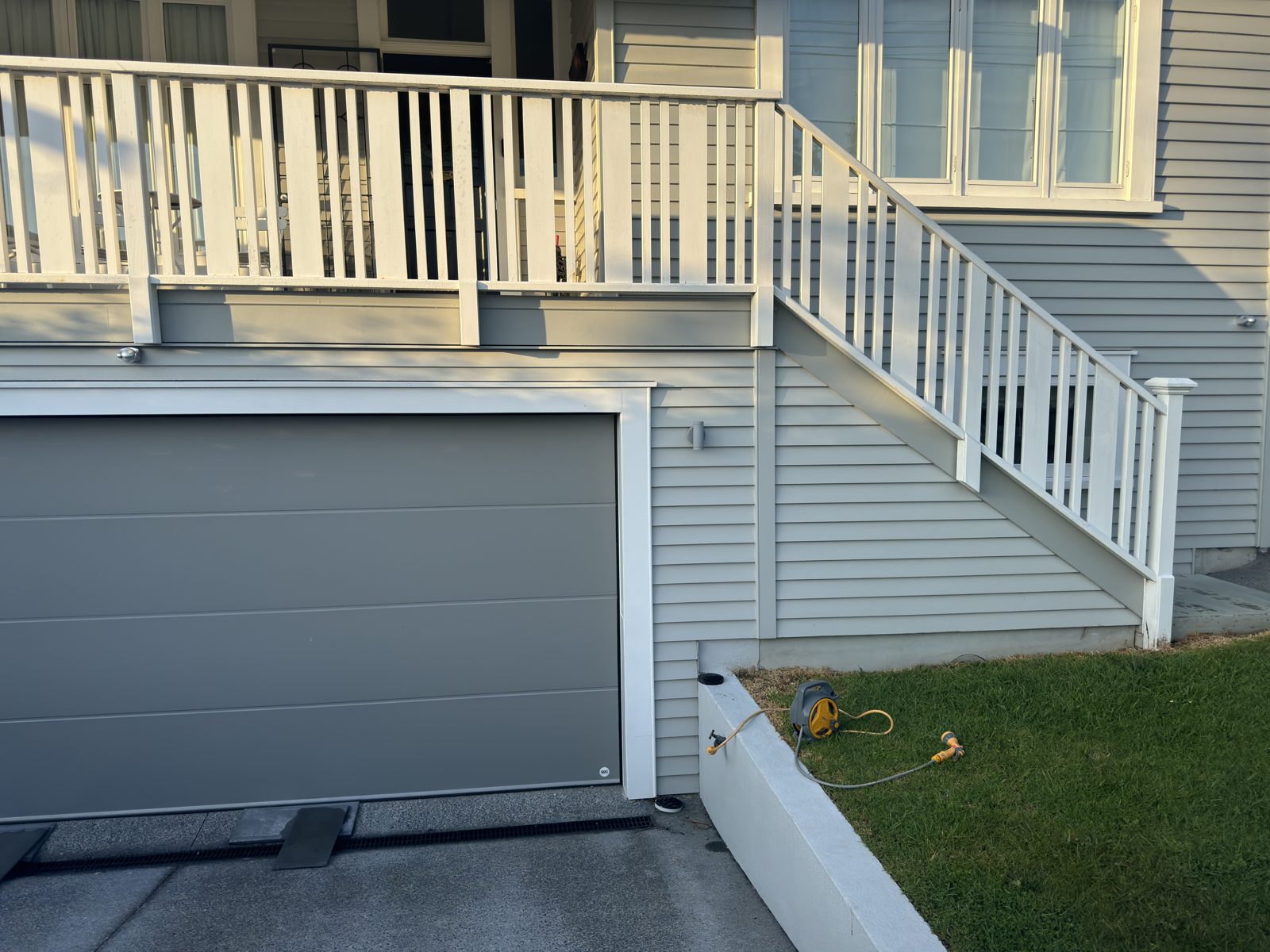
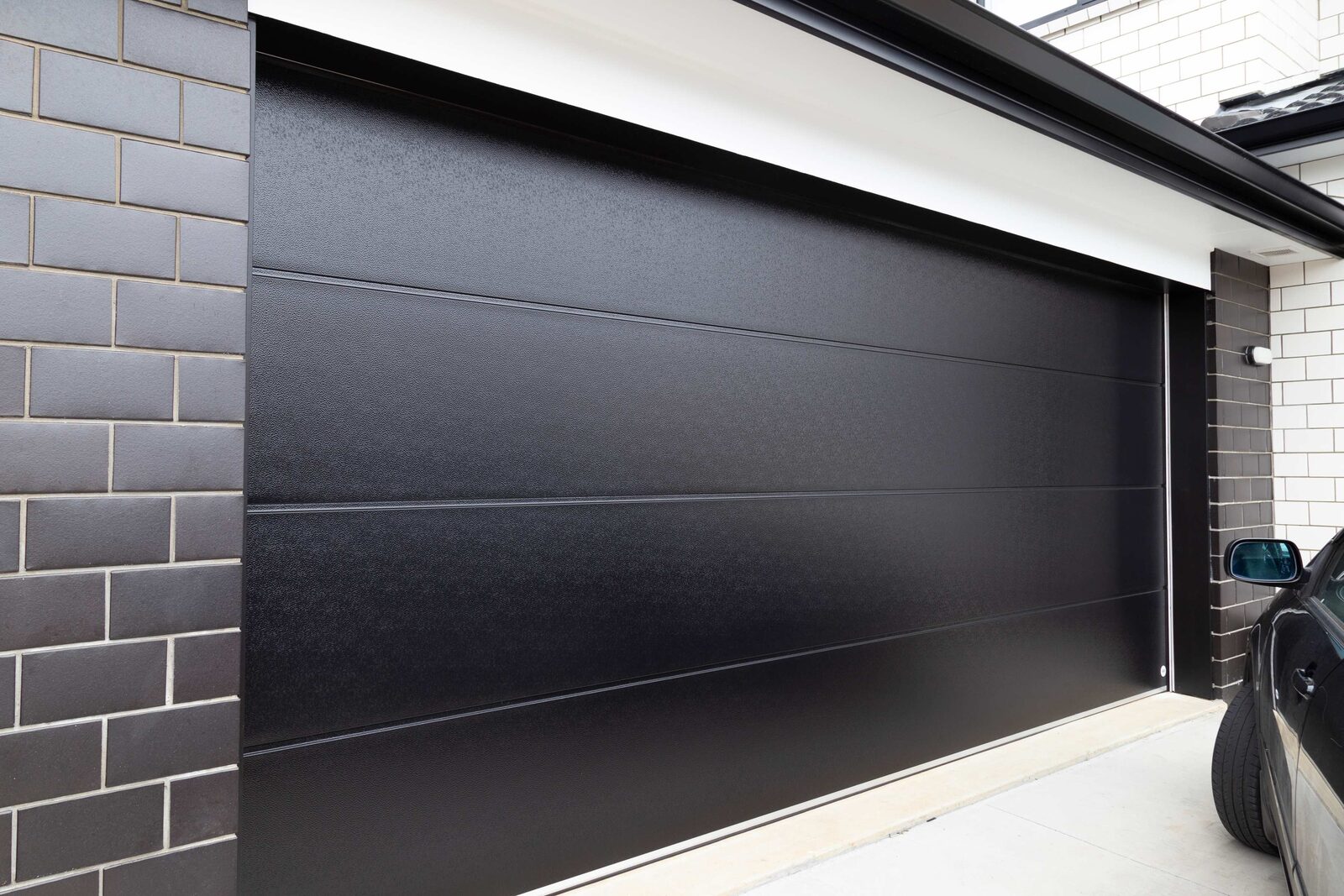
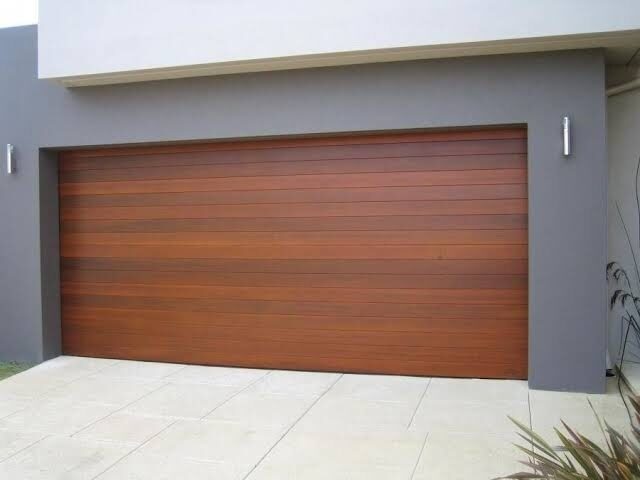
Double-skin steel panels with a PUR insulation core (R-value 2.0) turn your garage from the coldest room in the house into a space you can actually use: warmer in winter, cooler in summer, and noticeably quieter all year round.
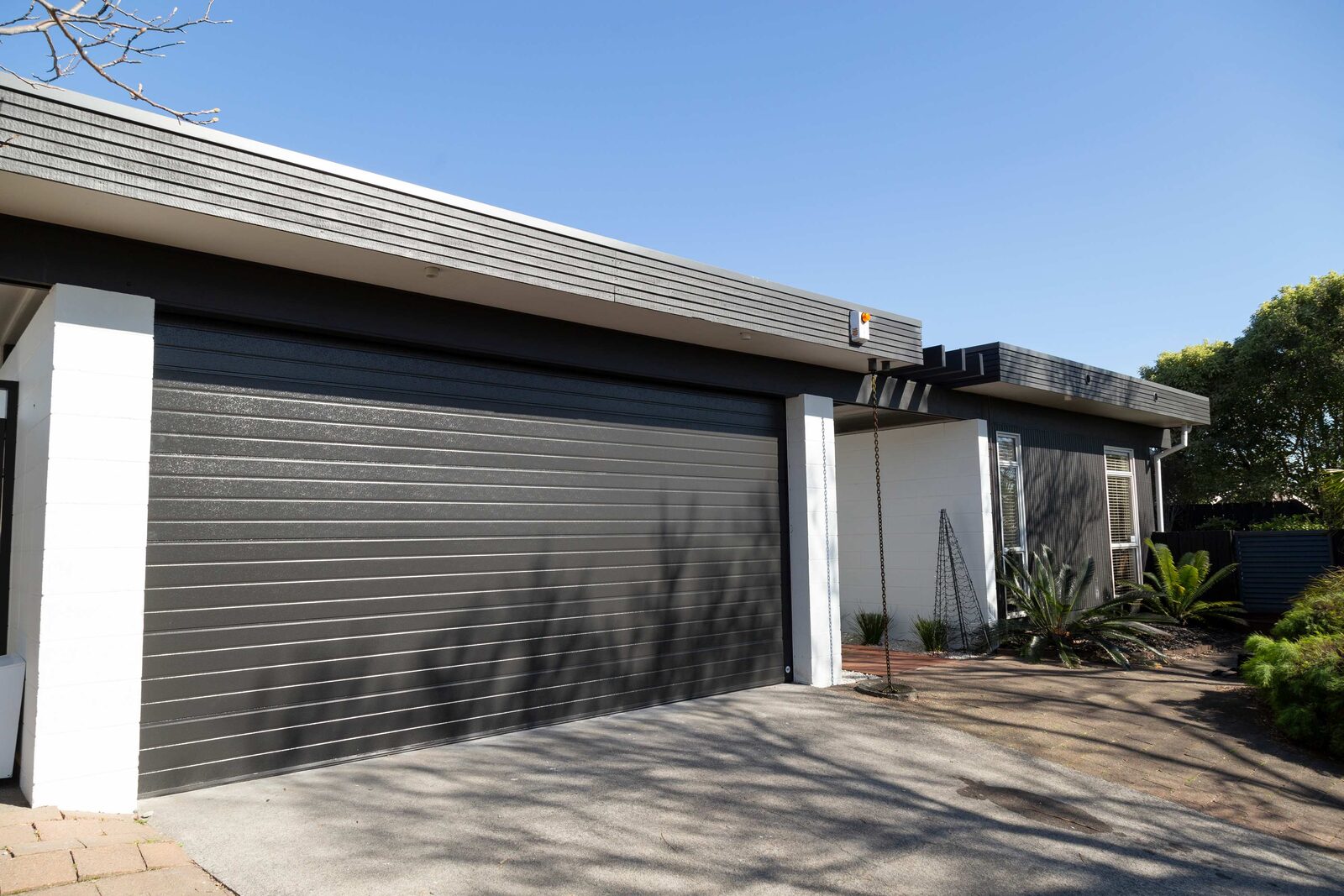
For most Auckland homes, yes: especially if the garage is attached to the house or used as a gym, workshop or playroom. An insulated sectional door with an R-value of 2.0 reduces heat loss through what is usually the largest uninsulated opening in the home, cuts street noise, and reduces condensation. Factory-built insulated doors also operate more quietly and are covered by our 5-year warranty.
Every insulated door we make is measured and built for your opening, not cut down from a standard size. Choose your panel profile, then any colour from the NZ steel range (or a custom colour match).
Pick a feature to see the real thing, from the insulation core to the app on your phone.
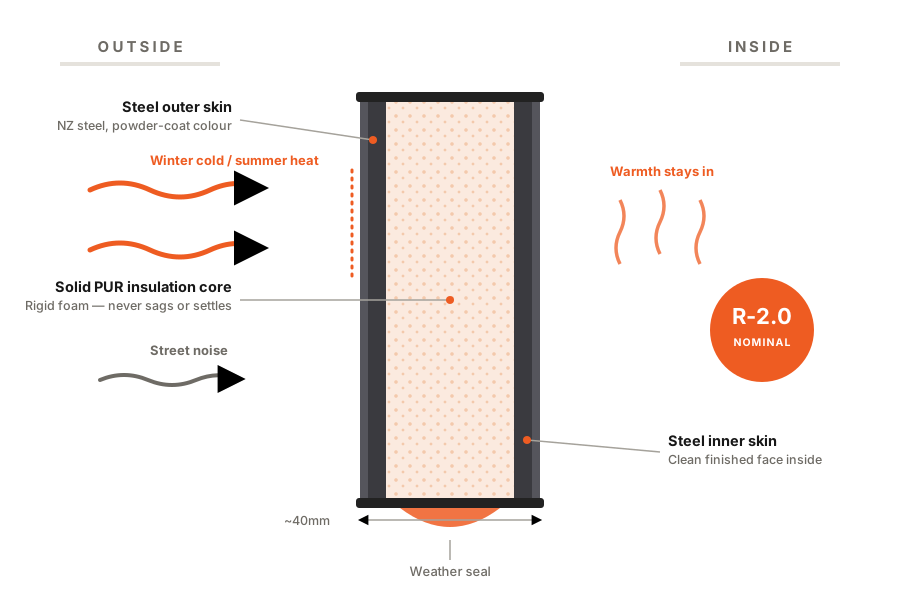
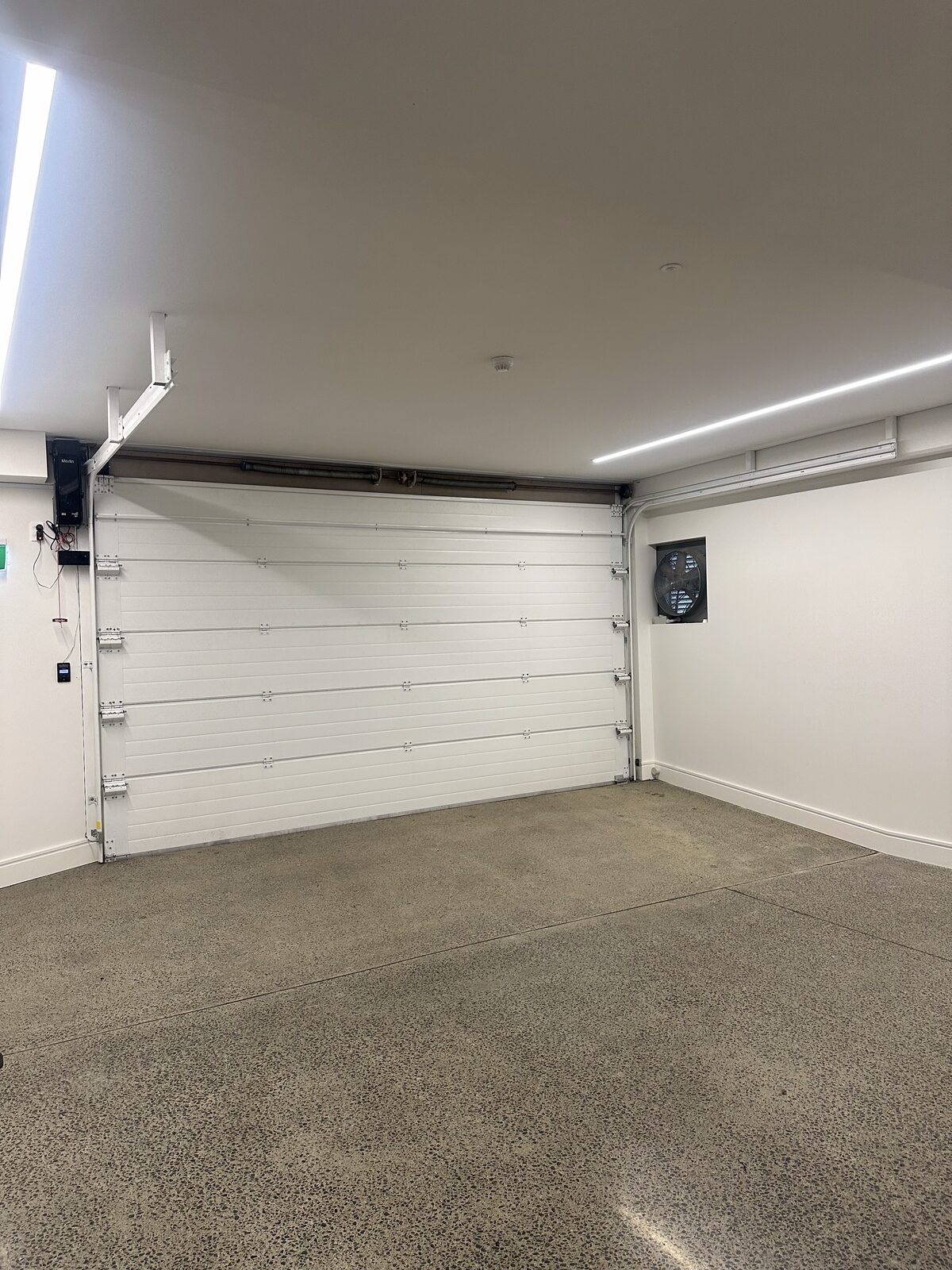
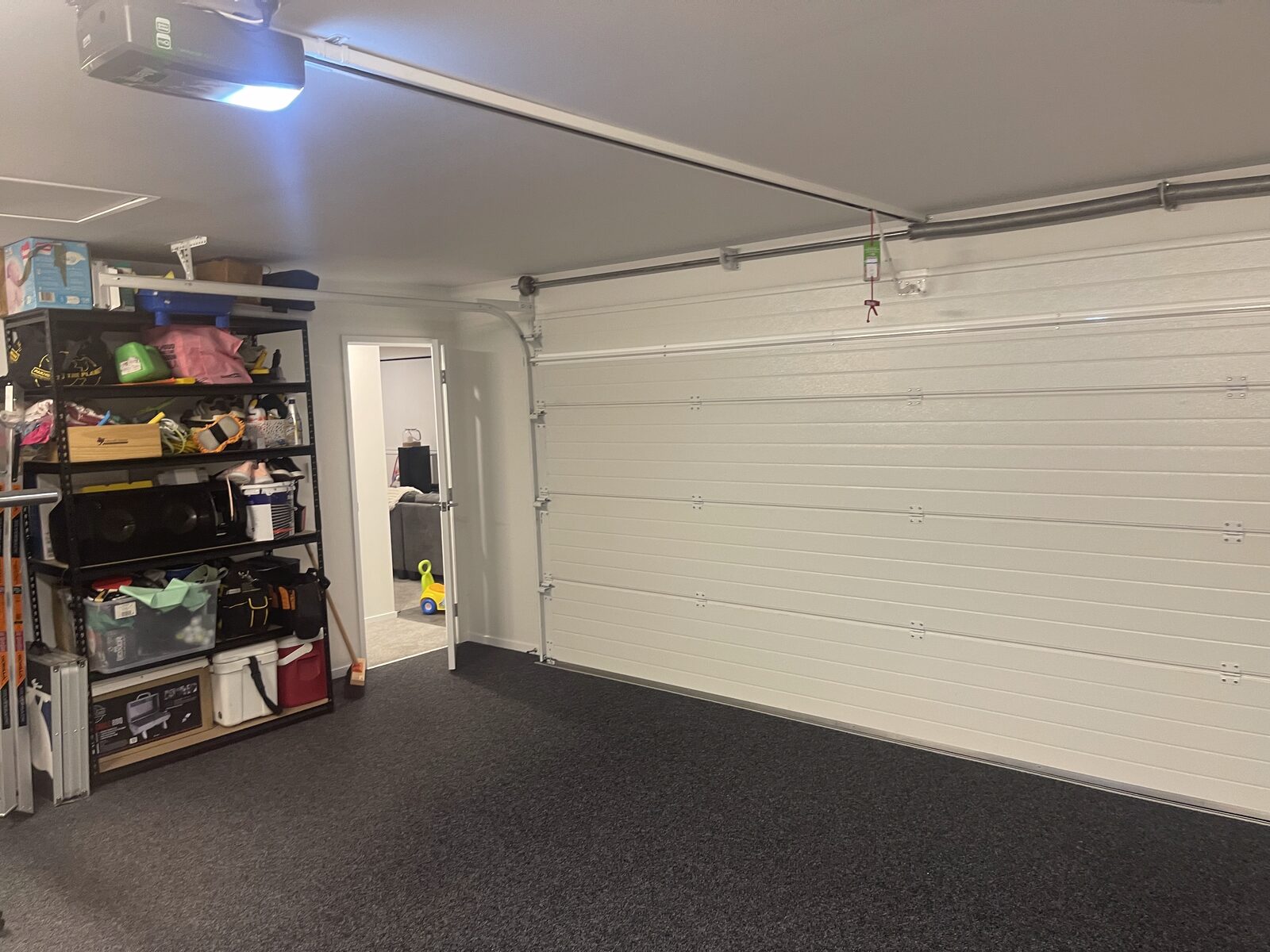
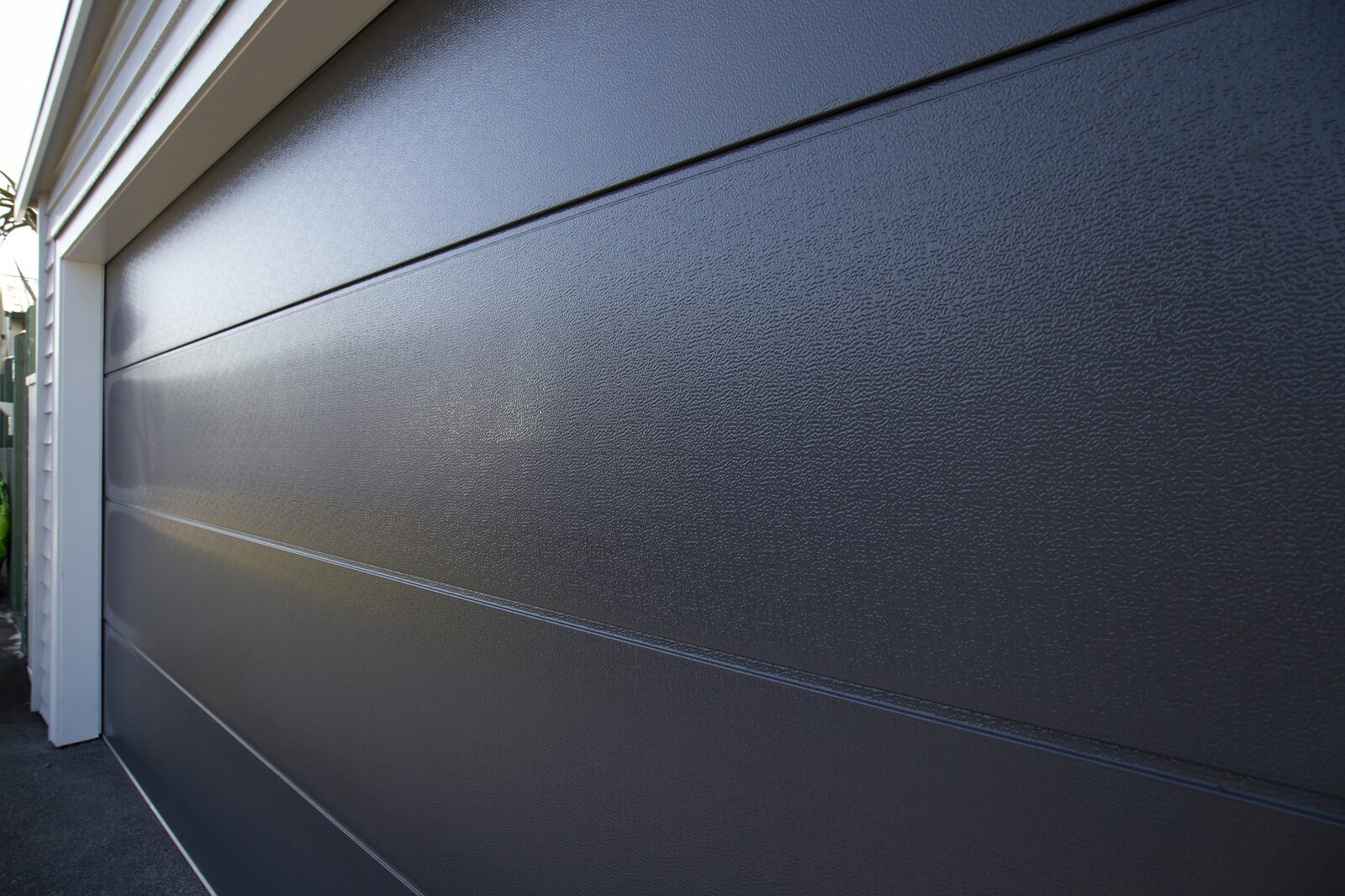
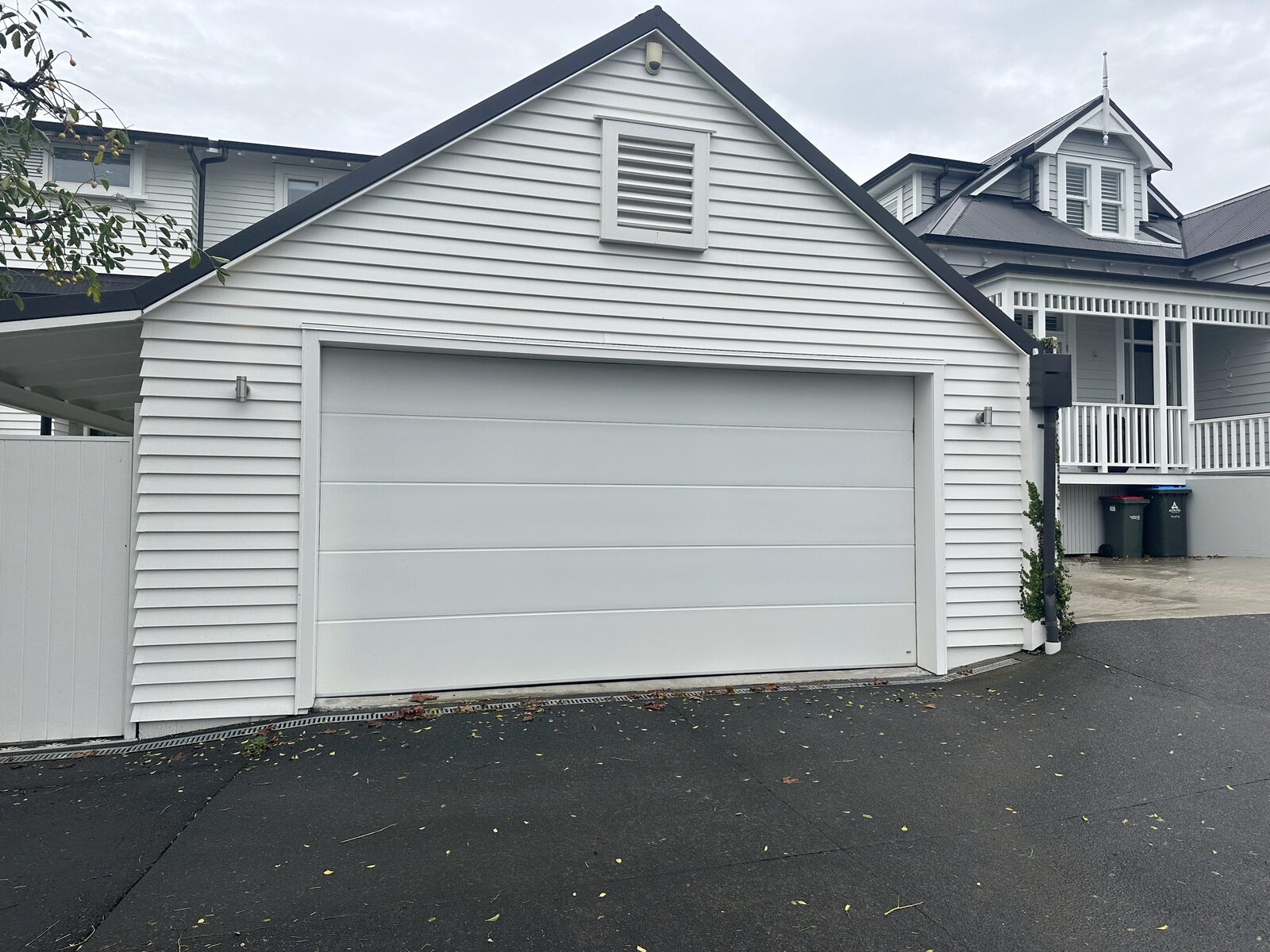
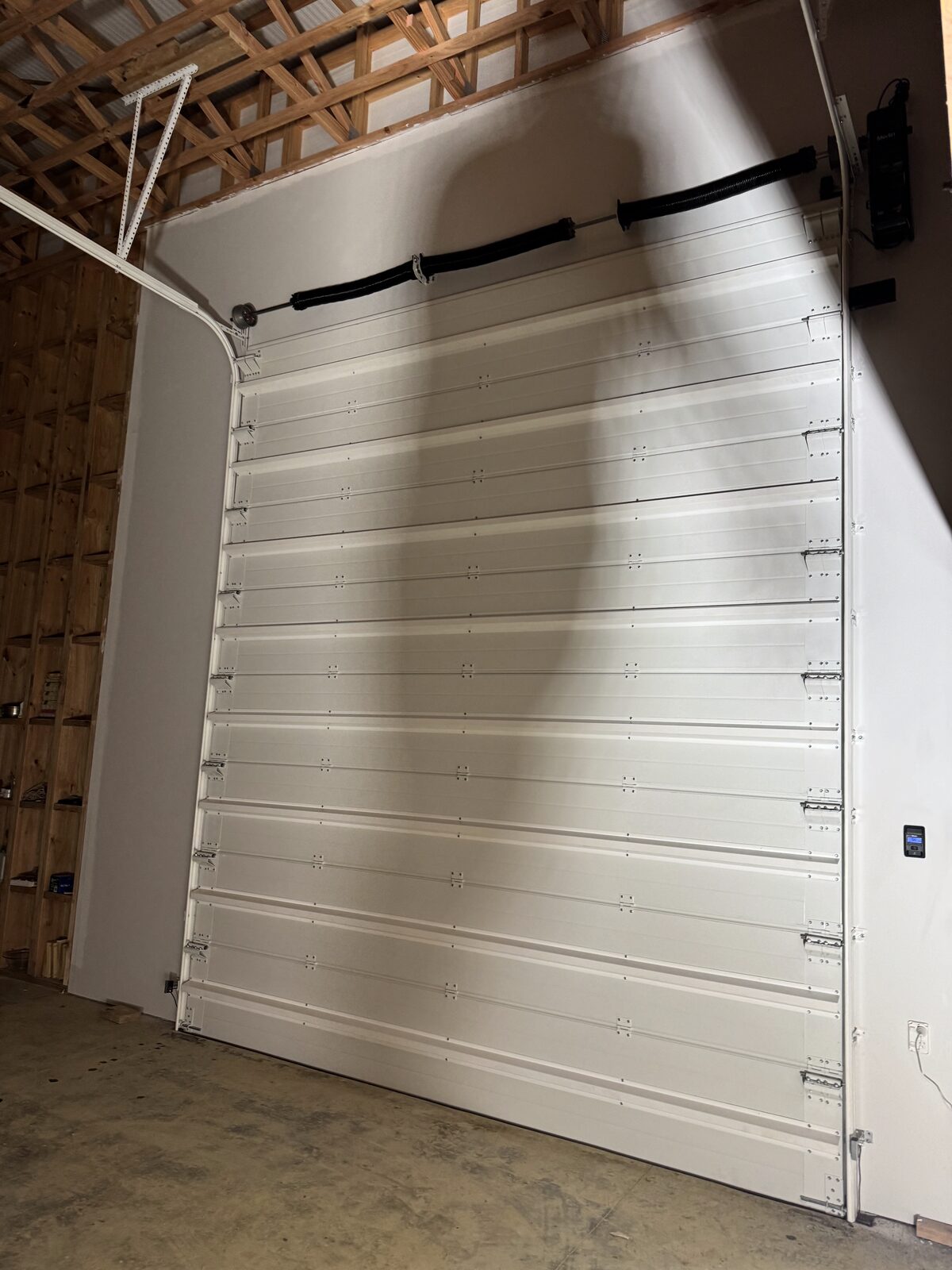
Each panel is a sandwich: a steel outer skin, a solid polyurethane (PUR) insulation core, and a steel inner skin. PUR is the same insulation used in freezer panels: it's rigid, light, and doesn't sag or settle over time like retrofit blanket products can.
You can add insulation to an existing door, but a door engineered with its insulation from day one performs better and lasts longer. Here's the honest comparison:
Already have a healthy door and just want it warmer? We'll give you a straight answer on whether retrofit garage door insulation makes sense for your situation, and when replacement is the smarter spend.
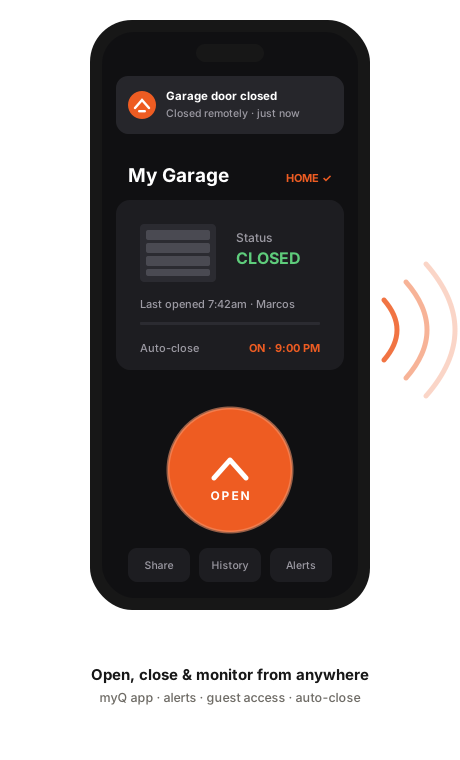
Pair your insulated door with a smart opener like the Merlin Commander Ultimate and you can open, close and check your door from anywhere: let a courier in from work, or get an alert if the door opens while you're away.
Every door is custom-made, so price depends on size, panel style and opener choice. As a guide for Auckland installations:
Most of our insulated doors use a polyurethane foam core injected between two steel skins, which is the best-performing option per millimetre of panel. Where a project calls for it we also fit Mammoth insulation, made in New Zealand from recycled textiles and recycled glass, which is the choice to ask about if the sustainability of the material matters to you.
Injected as a liquid and expanded to fill the panel, bonding to both skins. No gaps at the edges, no slumping, and the bond stiffens the panel so a wide door stays flatter and runs quieter.
New Zealand made, from recycled textile materials and recycled glass. Worth asking about where the embodied material matters as much as the thermal number.
We supply insulated sectional doors from established manufacturers including Dominator and Windsor, alongside doors we make to measure ourselves.
The honest comparison, on the five things that actually differ. An uninsulated door is not a bad door; it is a thinner one, and on a detached shed that is often all you need.
| Insulated | Non-insulated | |
|---|---|---|
| Thermal performance | Reduces heat loss and steadies the garage temperature | Minimal thermal barrier; follows the outside temperature |
| Noise | Quieter running, and road noise dampened by the foam core | More vibration and drumming, especially on a double |
| Condensation | Inner face stays nearer room temperature, so far less sweating | Coldest large surface in the garage; condensation collects on it |
| Construction | Double-skin steel with a bonded insulation core | Single skin of steel, or an uninsulated panel |
| Best suited to | Attached garages, rooms above, garages used as a room | Detached sheds and second garages where cost leads |
If your garage is detached and the walls and roof are bare, insulating only the door achieves little, and we will say so rather than sell you one. We quote retrofit and replacement side by side.
A foam-cored panel with air moving around it is a half-measure. Most of what people feel as a cold garage is draught rather than conduction, so every insulated door we fit comes with seals on the bottom and right around the perimeter, and the opening gets checked for square before the door is ordered.
This is also the part that fails first on an old door. If you can see daylight around a closed garage door, the seals have gone and that is a cheap fix long before it is a new door.
Not the main reason people buy one, but a real side effect. Two skins of steel bonded to a rigid foam core resist being levered or punched through in a way a single skin does not, and the panels lock into the tracks along their full height so there is no single point to attack.
The bonded core makes the panel stiff rather than springy. A single skin of steel flexes; a foam-cored panel resists, which matters more than the gauge of the steel on its own.
With an automated door the drive holds the door down. There is no handle to force and no latch to slip, and the opener cannot be run without a paired remote.
An insulated sectional door has no gaps to see through, so what is in the garage stays private. Worth considering if the garage is where the tools and bikes live.
Insulated panels come finished in the New Zealand steel colour range, baked on rather than painted over. On an Auckland house the two things that decide how a finish ages are sun and salt: a west-facing door takes UV all afternoon, and a coastal site takes salt whether or not you can see the water.
Samples come to you. Colour on a chart and colour on your wall in Auckland light are two different things, and the door is the largest single element on most street elevations.
Increasingly, not just the car. Gyms, workshops, home offices, band practice, and in a lot of Auckland houses the room above the garage is a bedroom. Every one of those uses is a reason the door matters more than it used to: the garage stopped being a shed attached to the house and became part of it.
That shift is what makes insulation worth the money rather than a nicety. A single skin of steel between a home office and an Auckland winter is the coldest wall in the building, and the one that drums every time a truck goes past. An insulated panel changes both, which is why people who work in their garage notice it within a week and people who only park in it often do not.
It also changes the room above. Those bedrooms are hard to heat because the floor sits over an unheated void with a large steel door on one side. Lifting the baseline temperature of the void makes the room above easier to warm and easier to keep warm.
Our own team measures, makes and fits the door. No subcontracted installs, and the person who quoted it is the person you ring if something needs attention. A standard replacement is most of a day: old door out and taken away, new door in, springs balanced to the finished weight, opener set and the safety reverse tested with you watching.
An insulated door weighs more than the one it replaces. Springs are sized to the finished door, not to what was there before, which is the single most common fault we are called to on other people's work.
On the installation, alongside the manufacturer warranty on the door and opener. The terms are confirmed in writing with your quote.
Annual servicing keeps the door balanced and the seals doing their job. It is also what prevents the spring failure that strands a car in the garage. Maintenance.
We work across all of Auckland from East Tamaki, and we service and repair every brand, not only the doors we supplied.
Tell us about your garage: we'll measure, recommend the right insulated door, and give you a fixed price. No obligation.
021 764 609