Anodised aluminium frames with toughened or acrylic glazing: natural light for garages, studios, pool houses and shopfronts, in clear, frosted, tinted or opal panels.
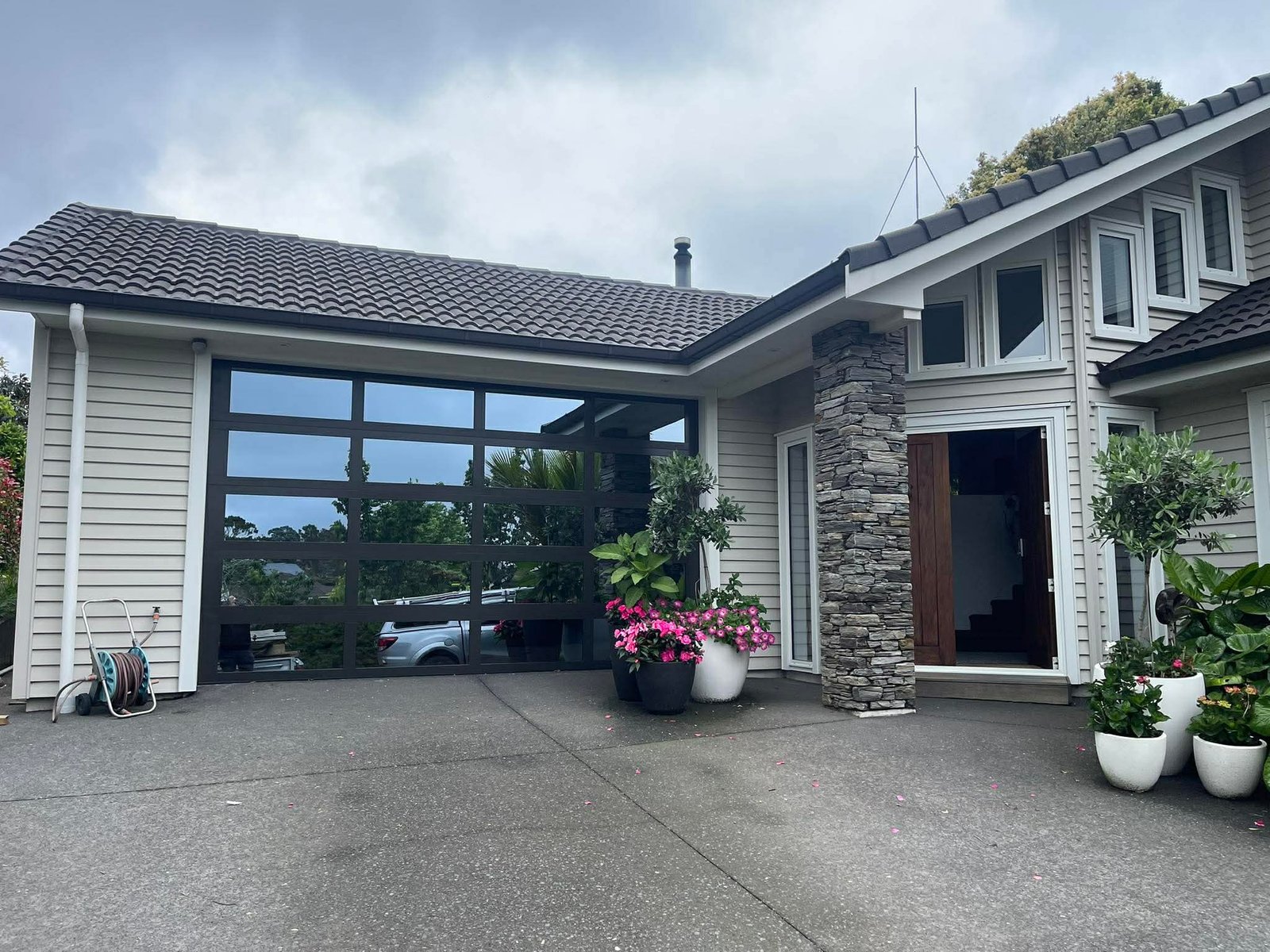
Yes: modern glass garage doors use toughened safety glass or high-impact acrylic in powder-coated or anodised aluminium frames, engineered for NZ wind zones. Frosted and opal glazing give daylight without visibility; double glazing options improve insulation. They are most popular for street-facing garages on modern homes, home gyms and studios, pool houses, and hospitality or showroom frontages.
Maximum light and full visibility, the showroom look. Best for pool houses, studios and commercial frontages.
Full daylight, no visibility, the most popular residential choice. The door glows at night like a lantern.
Cuts glare and heat gain on north-facing openings while keeping the glass aesthetic.
Frames in any powder-coat colour or anodised finish; single or double glazing. We confirm the glazing options and the wind-zone rating for your site at the measure.
Daylight transforms a garage gym. Pair with a quiet belt-drive opener for a genuinely premium space.
Open the whole wall to the deck in seconds, glass sectionals double as bi-fold-style openings at a fraction of the cost.
On architectural builds, an opal glass door is a feature, not a compromise, especially lit from inside at night.
Cafés, showrooms and workshops use glass roller and sectional doors as operable frontage. We handle commercial specs too.
There is no legal standard, but most New Zealand single garage doors are about 2,400 mm wide by 2,100 mm high, and most doubles about 4,800 mm by 2,100 mm. Older Auckland houses are often narrower, and new builds frequently go taller for a van or a roof box. Every glass door we make is built to the measured opening, whatever its size and shape, rather than to a standard size.
Commonly 2,400 mm to 2,600 mm wide. Anything under about 2,300 mm makes parking a modern wagon tight, which is worth knowing before you replace like for like.
Commonly 4,800 mm to 5,000 mm wide as one door. Two singles with a pillar between them is the alternative, and it changes the look of the elevation considerably.
2,100 mm is the usual height. Going to 2,400 mm suits a van, a tall 4WD or a roof-mounted bike rack, and needs headroom checked at the site measure.
There is no single best material, only the right one for the opening and the elevation. Steel is the practical default: strongest value, widest colour range, takes insulation. Glass and aluminium buy daylight and a contemporary look at a higher price. Cedar gives warmth and needs oiling. Match the material to the house, the exposure and how you use the garage.
Compare the options across the full garage door range.
A glass door is a box frame of powdercoated aluminium holding glazed panels, built to the measured opening. The specification covers the frame profile, the powdercoat finish, the glass type and how transparent it is, and the track and opener the finished weight needs. We bring samples so you choose the frame colour and glass against your own cladding.
An aluminium box frame in any powdercoat finish or anodised colour. The frame profile sets how heavy the door looks: a slim profile reads lighter, a wider one reads more solid.
Clear, frosted, tinted or back-painted glass, in a full-panel or divided pattern. The pattern decides how much the door shows at night, when a lit garage becomes visible from the street.
Glass and aluminium weigh more than a steel skin, so the track, springs and opener are sized to the finished weight. We confirm all three at the site measure.
Glazing samples and frame colours brought to your free measure.
021 764 609