
When it comes to sectional garage doors, Auckland homeowners find they are well suited to both new builds and renovation projects. However, the way they’re planned, specified, and installed can differ significantly depending on the stage of the build. Understanding these differences helps homeowners, builders, and renovators choose the right configuration and avoid compromises later on.
In Auckland, where housing ranges from brand-new developments to older homes undergoing upgrades, sectional garage doors are often selected because of their flexibility, clean appearance, and compatibility with insulation and automation.
A garage door is not a standalone product — it interacts with the structure around it. Ceiling height, wall alignment, access, and finishing details all influence how a sectional door performs and looks once installed.
The main difference between new builds and renovations is control:
Both approaches can produce excellent results, but they require different planning considerations.
In new builds, sectional garage doors can be specified early in the design process. This gives architects and builders the opportunity to optimise the garage layout around the door system rather than the other way around.
New homes typically allow for:
This makes it easier to integrate features such as:
Because the garage is designed from scratch, the door can be selected to complement the overall look of the home rather than simply filling an opening.
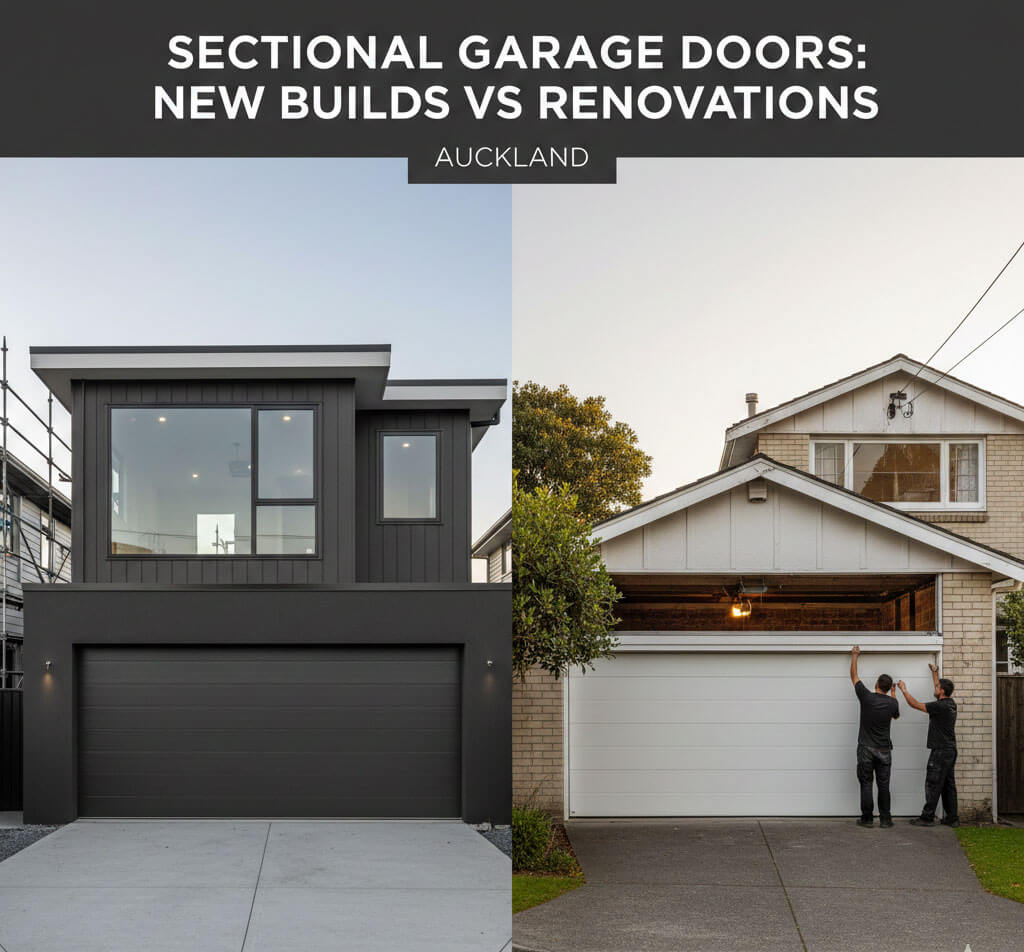
Renovations present a different set of challenges. Existing garages may have:
Despite these constraints, sectional garage doors are often still a strong option due to their adaptable track systems and modular panel design.
Many renovations involve replacing:
In these cases, a sectional garage door can improve:
However, accurate measurement and site assessment are essential to ensure the new door fits and operates correctly within the existing structure.
One of the most important differences between new builds and renovations is ceiling space.
In new builds:
In renovations:
This doesn’t mean sectional doors aren’t suitable for renovations — it simply means the system must be configured carefully to suit the space.
Insulation is another area where project type affects decision-making.
In new homes, insulated sectional garage doors are often chosen from the outset, particularly when:
Planning insulation early allows door weight, springs, and automation to be sized correctly from day one.
In renovation projects, homeowners sometimes consider adding insulation later. While retrofitting is possible in some cases, insulated sectional doors perform best when insulation is built into the door from the start.
For garages being upgraded as part of a wider renovation, choosing an insulated door during replacement usually delivers better long-term results.
Automation is common in both new builds and renovations, but the approach can differ.
In new builds:
In renovations:
Sectional garage doors are well suited to automation in both cases, as long as the system is designed correctly for the environment.
Design expectations often differ between new builds and renovations.
New builds frequently aim for:
In these cases, sectional doors can be paired with design-led options such as flush mount styles to achieve a seamless look.
Renovations, on the other hand, may focus on:
Sectional doors work well in both scenarios due to their wide range of finishes and configurations.
The table below summarises how sectional garage doors typically perform across the two project types.
| Project Type | Key Advantages of Sectional Garage Doors |
|---|---|
| New builds | Full design flexibility, ideal ceiling space, seamless automation and insulation integration |
| Renovations | Adaptable replacement for older doors, improved sealing, noise reduction, and modern appearance |
Across both new builds and renovations, a few common mistakes can limit results:
Avoiding these mistakes usually comes down to early assessment and choosing a door system that suits the specific project type.
Sectional garage doors are a versatile option that can work equally well in new builds and renovation projects — provided they’re planned correctly. New builds benefit from early integration and design freedom, while renovations benefit from adaptability and performance upgrades.
Understanding how project type affects layout, insulation, automation, and installation helps ensure the door system delivers long-term comfort, reliability, and usability.
Whether you need a simple roller door, a premium insulated sectional door, or a custom architectural solution, we'll help you understand exactly what factors affect your investment—and how to get the best value.
Call 021 764 609 or email info.doorcompany@gmail.com today.
Let's discuss your garage door project and find the perfect solution within your budget.
SEO By 