
Yes. Sectional garage doors are one of the best options for internal access garages because they seal more effectively, operate more quietly, and are compatible with insulated construction—helping reduce noise, drafts, and temperature transfer into the home.
An internal access garage isn’t just a place to park a car — it’s directly connected to your living space. That changes what matters most in a garage door.
Unlike detached garages, internal access garages can allow:
Because of this, the type of garage door you choose has a direct impact on comfort inside the home, not just convenience.
Sectional garage doors are often recommended for internal access garages because their design allows for better sealing, quieter operation, and stronger panel construction compared to many other door types.
To understand the system itself, it helps to start with the core service overview: Sectional garage doors.
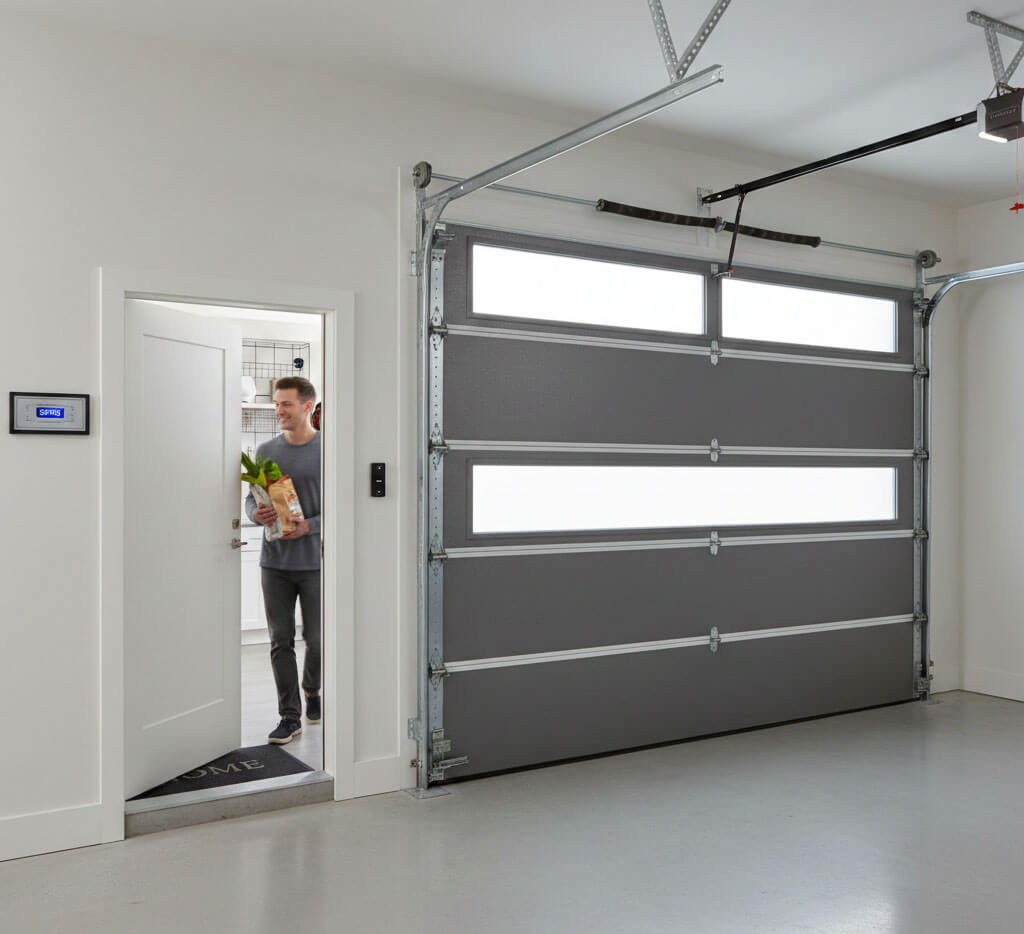
How sectional garage doors differ from other door types
Sectional garage doors are made up of horizontal panels that move vertically and then run along ceiling-mounted tracks. This differs from:
This panel-based, track-guided movement provides two key advantages for internal access garages:
Because the door doesn’t flex or swing outward, it’s easier to maintain a tight seal around the edges of the opening.
One of the most common concerns with internal access garages is noise — especially when:
Sectional garage doors tend to operate more quietly because:
When automation is added, the controlled movement becomes even quieter, reducing the sudden starts and stops that cause rattling.
While sealing and panel design already help with noise, insulated sectional garage doors take this a step further by absorbing sound through their core construction.
This can noticeably reduce:
Learn more about how insulation affects comfort and noise.
Garages connected to the house often act as a buffer zone between outdoors and indoors. If the garage door allows air to move freely, temperature fluctuations can affect the entire home.
Sectional garage doors help with temperature stability because:
This is particularly noticeable during colder mornings or hot afternoons, when a poorly sealed garage door can allow temperature extremes to creep into adjoining rooms.
Automation suitability for daily use
Internal access garages are used more frequently than detached garages, which makes smooth and reliable operation important.
Sectional garage doors are well suited to automation because:
This results in:
For households that rely on daily garage access, this reliability matters just as much as comfort.
Although sectional garage doors suit most internal access garages, they’re not always the right choice.
Potential limitations include:
A site assessment is usually required to confirm whether the garage layout supports a sectional system or whether a modified track configuration is needed.
Before choosing a door type, it helps to compare how different features affect an internal access garage.
| Feature | Internal Access Garage Benefit |
|---|---|
| Sealing performance | Reduces drafts and limits air movement into living areas |
| Noise control | Quieter operation compared to many other door types |
| Automation compatibility | Smooth, reliable daily operation |
| Insulation options | Improves comfort and temperature stability |
If your garage:
Then a sectional garage door is often a strong option - particularly when paired with insulation and professional installation.
Whether you need a simple roller door, a premium insulated sectional door, or a custom architectural solution, we'll help you understand exactly what factors affect your investment—and how to get the best value.
Call 021 764 609 or email info.doorcompany@gmail.com today.
Let's discuss your garage door project and find the perfect solution within your budget.
SEO By 