
Garage door insulation helps stabilise garage temperatures, reduce condensation, minimise outside noise, and improve the energy efficiency of homes with attached garages. In New Zealand—especially in humid coastal areas like Auckland—insulating a garage door can significantly improve comfort and protect tools, vehicles, and stored items from moisture and temperature swings.
For many homeowners, insulation is one of the most practical upgrades that can improve how a garage functions year-round.
Garages are often overlooked in home insulation planning, yet they are one of the largest openings in the building envelope. A single uninsulated metal garage door can transfer large amounts of heat or cold into the space, particularly in garages connected to living areas.
This guide explains how garage door insulation works, the materials used in New Zealand, the costs involved, and when it makes sense to upgrade to a purpose-built insulated garage door.
Many garages in New Zealand are built without insulation, even when they connect directly to the house. Because garage doors are typically made from thin metal panels, they easily transfer outside temperatures into the garage.
In winter, this means cold air entering the space. In summer, the garage can trap heat and become extremely warm.
Insulation helps create a more stable internal temperature, reducing the impact of outdoor conditions.
In Auckland's coastal climate, insulation also helps reduce condensation. Moisture forms when warm indoor air meets cold metal surfaces, which often happens with uninsulated garage doors.
Condensation can lead to:
mould growth
rust on tools or vehicles
moisture damage to stored items
damp smells inside the garage
Adding insulation helps stabilise the temperature of the door panels, reducing the likelihood of condensation forming.
For homes with internal-access garages, insulation also improves comfort inside the house by reducing heat transfer through the garage.
Garage door insulation works by creating a barrier that slows the transfer of heat between the outside environment and the garage interior.
This barrier is typically installed inside the door panel structure.
Insulated garage doors commonly use double-skin construction, where insulation is sandwiched between two layers of steel. This design improves both thermal performance and structural rigidity.
Heat transfer normally occurs when warm air moves through gaps or thin surfaces. Insulation reduces this transfer by adding resistance to the flow of heat.
Insulation performance is usually measured using R-value, which represents thermal resistance.
Higher R-values provide better insulation performance, although correct installation and sealing are also important.
Insulated doors also help reduce vibration and sound transmission, making garage door operation quieter.
Different insulation materials are used in garage doors. Each material
offers different levels of thermal performance and durability.
| Insulation Type | Typical R-Value | Advantages | Best Use |
|---|---|---|---|
| Polyurethane Foam | 1.8 – 2.4 | Excellent thermal performance and structural strength | Attached garages |
| Polystyrene (EPS) | 1.3 – 1.8 | Affordable and moisture resistant | Detached garages |
| Reflective Foil | Low–Moderate | Low cost and easy installation | DIY insulation kits |
Polyurethane insulation is generally considered the most effective option for residential garage doors because it offers high thermal resistance and increases panel rigidity.
Insulated garage doors offer several advantages compared with standard single-skin doors.
Insulation slows heat transfer, helping maintain a more consistent garage temperature throughout the year.
By keeping the interior panel surface warmer, insulation helps reduce moisture formation.
Insulated doors absorb vibration and reduce rattling during opening and closing.
Double-skin insulated panels are stronger and resist dents better than thin single-layer doors.
For garages attached to the house, insulation helps prevent cold or hot air entering the living space.
Energy-efficient home features are increasingly valued by buyers, and insulated garage doors are often seen as a premium upgrade.
| Feature | Insulated Door | Non-Insulated Door |
|---|---|---|
| Temperature control | Stable indoor temperature | Large temperature swings |
| Noise | Quieter operation | More vibration and noise |
| Condensation | Reduced moisture | Frequent condensation |
| Durability | Stronger double panels | Thin metal panels |
In some cases, insulation can be added to an existing garage door. However, retrofitting insulation rarely delivers the same performance as a purpose-built insulated door.
Most retrofit solutions involve installing foam panels, reflective foil, or custom liners to the inside of the door.
These methods may offer modest improvements but also have limitations.
These involve attaching rigid foam panels to the inside of the door.
They may:
reduce heat transfer slightly
improve comfort marginally
However, they can also:
leave gaps between panels
add uneven weight
affect door balance
Foil insulation reflects radiant heat but offers limited thermal resistance.
It may help slightly during summer but generally provides minimal winter benefit.
Some insulation systems use fitted liners inside the door frame. These look cleaner than DIY kits but still rely on the original door structure.
Adding insulation to a single-skin door does not change the structural design of the door.
Because the original door remains thin and flexible:
panel vibration may continue
structural rigidity does not improve
condensation may still occur
Retrofitted insulation can also increase the door weight. If springs and motors are not adjusted, this may cause:
uneven lifting
extra strain on the opener
reduced lifespan of mechanical components
Retrofitting insulation can be reasonable when:
the door is relatively new
the garage is detached from the house
modest improvement is sufficient
replacement is not currently practical
In these situations, insulation kits can offer some improvement as a temporary solution.
Replacing the door with a purpose-built insulated garage door is often recommended when:
the garage connects directly to the house
condensation problems are persistent
noise reduction is important
the door is aging or worn
automation is being upgraded
Insulated garage doors are engineered as a complete system with proper structural support and integrated insulation.
The cost of insulation depends on whether insulation is added to an existing door or installed in a new door.
| Door Type | Insulation Option | Typical Added Cost (NZD) |
|---|---|---|
| Single roller door | EPS retrofit panels | $400 – $600 |
| Sectional single door | Factory PU insulation | $600 – $900 |
| Sectional double door | Factory PU insulation | $800 – $1,200 |
Although insulated doors cost more upfront, they often provide better long-term performance.
Maintaining insulated garage doors helps preserve their performance.
Recommended maintenance includes:
cleaning door panels regularly
lubricating hinges and springs twice per year
checking weather seals annually
inspecting insulation panels for moisture damage
Routine servicing helps keep the door operating efficiently.
Garage door insulation is one of the most effective upgrades for improving comfort, reducing condensation, and increasing the energy efficiency of homes with attached garages.
While insulation kits can offer modest improvements for existing doors, purpose-built insulated garage doors provide the best long-term performance through integrated panel construction and better sealing.
For many New Zealand homeowners—especially in humid coastal areas like Auckland—insulated garage doors offer improved durability, quieter operation, and a more comfortable garage environment year-round.
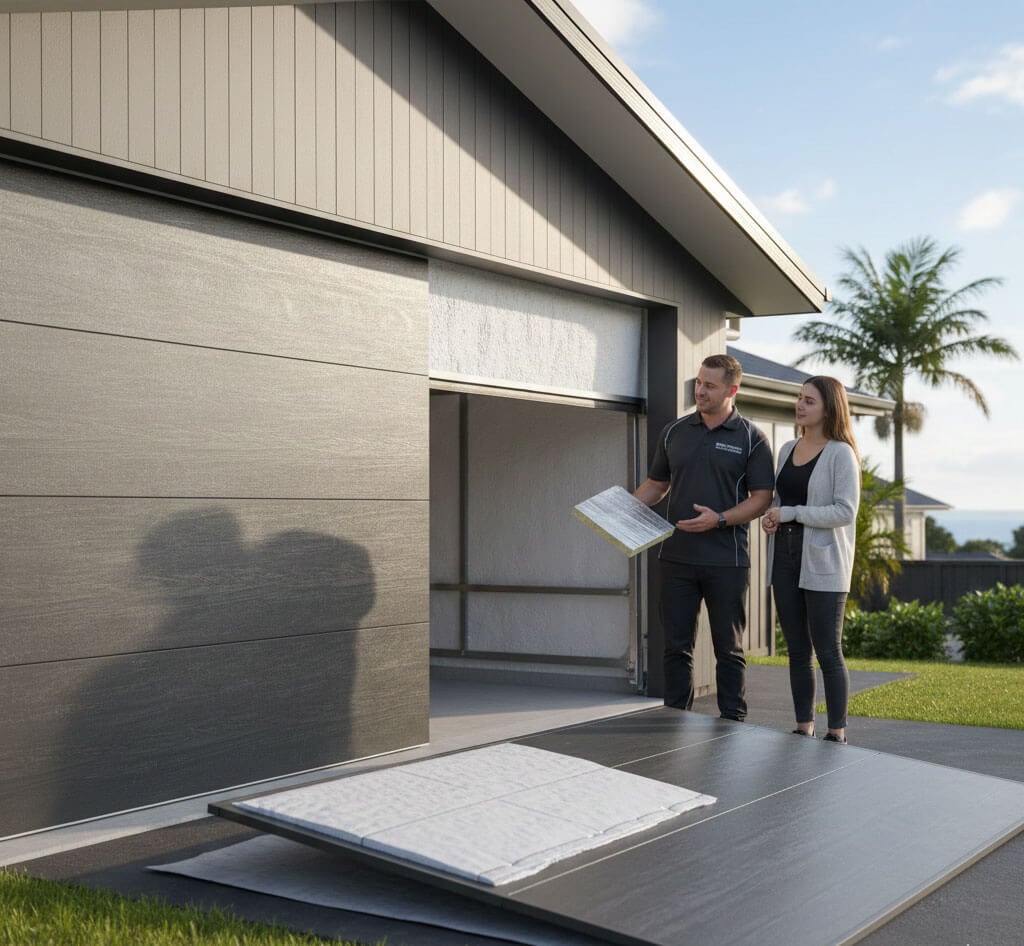
Whether you need a simple roller door, a premium insulated sectional door, or a custom architectural solution, we'll help you understand exactly what factors affect your investment—and how to get the best value.
Call 021 764 609 or email info.doorcompany@gmail.com today.
Let's discuss your garage door project and find the perfect solution within your budget.
SEO By 