
Quiet sectional garage doors are widely regarded as one of the best investments for a peaceful home, particularly when compared to older tilt doors or standard roller doors. This quieter operation is not accidental — it’s the direct result of how sectional doors are constructed, how they move, and how they interact with advanced tracks, panels, and modern automation systems.
For Auckland homes where garages are often located beneath bedrooms, beside living spaces, or used early in the morning and late at night, noise reduction is a major consideration when choosing a garage door.
Garage door noise isn’t just about the moment the door opens or closes. In homes with internal access garages, noise can:
Because sectional garage doors are commonly used in modern homes with internal access, their quieter operation is one of the reasons they’re frequently recommended.
The way a garage door moves has a direct impact on how much noise it produces.
Sectional garage doors are made up of multiple horizontal panels that:
This design reduces sudden movement, vibration, and flex — all common sources of noise in other door types.
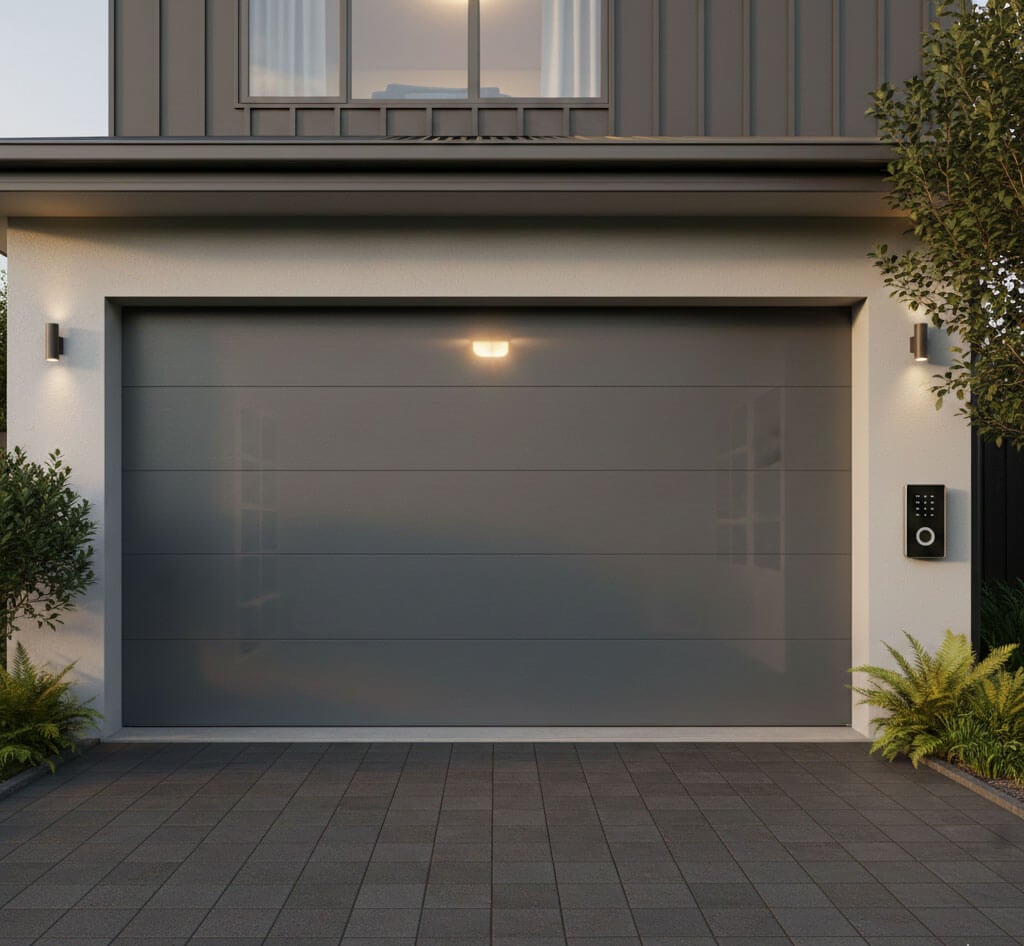
To understand why sectional doors are quieter, it helps to compare how different doors move.
Because sectional doors don’t rely on a single pivot point or tight rolling mechanism, they tend to produce less mechanical noise during operation.
Track systems and vibration control
Another key reason sectional garage doors are quieter is the track system itself.
Tracks guide the door along a defined path, which:
When tracks are installed correctly and maintained properly, the door glides rather than rattles.
Noise issues usually occur only when:
These issues are generally preventable with professional installation and routine servicing.
Automation plays a major role in how quiet a garage door feels.
Sectional garage doors are well suited to automation because their balanced design allows motors to:
This controlled movement is noticeably quieter than doors that rely on gravity or manual force.
For homes where noise reduction is a priority, automation paired with a sectional door often delivers the best overall experience.
While sectional garage doors are already quieter by design, insulated sectional doors can further reduce noise.
Insulated doors use a solid core between panels, which:
This is especially helpful in urban Auckland environments where street noise, neighbours, and traffic can contribute to overall sound levels.
Many noise complaints come from homes with older garage door systems.
Common causes include:
Replacing these systems with modern sectional garage doors often results in a noticeable reduction in noise, even without insulation.
While sectional doors are generally quiet, unusual noise can indicate an underlying issue.
Signs to watch for include:
These symptoms usually point to alignment or maintenance issues rather than a design flaw.
Addressing them early helps preserve quiet operation and prevents further wear.
The table below summarises typical noise characteristics across common garage door types.
| Garage Door Type | Typical Noise Profile |
|---|---|
| Sectional garage doors | Smooth, low-vibration operation |
| Roller doors | More vibration as the curtain rolls into a drum |
| Tilt doors | Heavier movement with more flex and impact noise |
To keep a sectional garage door operating quietly:
These steps help maintain the advantages built into the system.
Sectional garage doors are quieter than many other door types because of how they’re designed, installed, and operated. Their panel-based construction, guided movement, and compatibility with automation all contribute to smooth, low-noise performance.
For homes where garage noise affects daily comfort - especially those with internal access - sectional garage doors are often a practical, long-term solution.
Whether you need a simple roller door, a premium insulated sectional door, or a custom architectural solution, we'll help you understand exactly what factors affect your investment—and how to get the best value.
Call 021 764 609 or email info.doorcompany@gmail.com today.
Let's discuss your garage door project and find the perfect solution within your budget.
SEO By 