
When it comes to insulated garage doors, condensation is a major concern for many homeowners. The short answer is yes — insulated garage doors can significantly reduce condensation in New Zealand homes, particularly in garages that experience temperature swings, moisture buildup, or have internal access to the house. While they don’t eliminate condensation entirely on their own, insulated doors play an important role in stabilising temperatures and limiting the moisture conditions that cause condensation to form.
For Auckland homes, where humidity, coastal air, and overnight temperature drops are common, condensation inside garages is a frequent and often underestimated issue.
Condensation forms when warm, moist air comes into contact with a cold surface. In garages, this typically happens when:
In many New Zealand homes, garages are colder than the house but warmer than outside air. This temperature imbalance creates ideal conditions for condensation — especially in winter and during humid months.
Garage doors are one of the largest surfaces in the garage and one of the main points where temperature transfer occurs.
Non-insulated garage doors:
When moisture-laden air meets a cold metal door, condensation forms on the inside surface. Over time, this can lead to dampness, surface corrosion, and damage to stored items.
Insulated garage doors help manage condensation by reducing temperature extremes inside the garage.
They do this by:
By keeping the inside face of the door closer to the garage air temperature, insulated doors reduce the likelihood that moisture will condense on the door surface.
This is particularly effective in garages with internal access, where temperature differences between the house and garage are more pronounced.
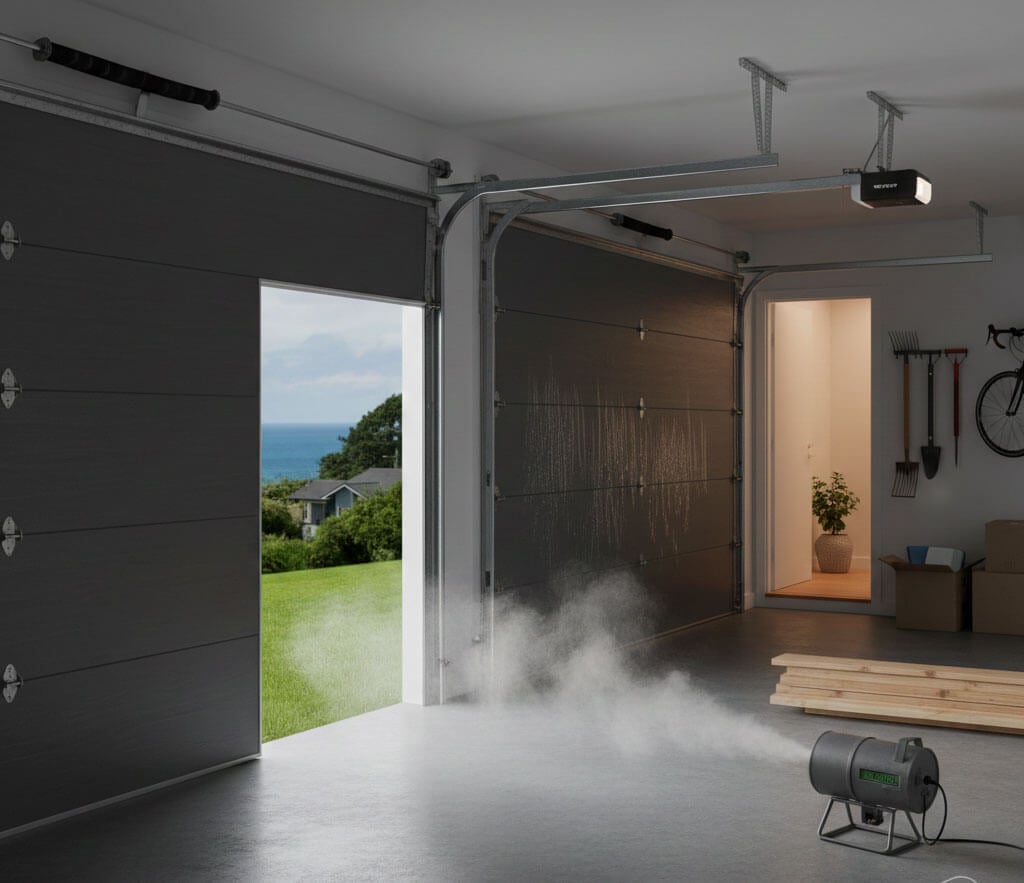
It’s important to note that insulation alone doesn’t solve every condensation issue. Ventilation still plays a role.
However, in many garages:
Insulated garage doors help by reducing the temperature gap that causes condensation in the first place. When combined with sensible ventilation, they create a more stable garage environment.
Condensation isn’t just an inconvenience — it can lead to long-term problems, including:
In garages used as workshops, gyms, or storage areas, condensation can quickly become a recurring issue if not addressed properly.
Garages connected directly to the home are especially sensitive to moisture issues.
When condensation builds up in an internal access garage:
Insulated garage doors are often recommended in these situations because they help maintain a more consistent internal garage temperature, reducing moisture buildup at its source.
This is one reason insulated doors are commonly paired with sectional garage door systems, which already offer better sealing performance.
What insulated garage doors do not do
It’s important to set realistic expectations.
Insulated garage doors:
They do not:
They work best as part of an overall garage environment strategy rather than a single fix.
Several factors affect how much difference an insulated garage door will make.
| Factor | Impact on Condensation |
|---|---|
| Garage usage | Frequent vehicle use increases moisture levels |
| Door insulation | Reduces cold surfaces where condensation forms |
| Sealing quality | Limits moist air entering from outside |
| Ventilation balance | Prevents moisture buildup without over-cooling |
An insulated garage door may be worth considering if:
In many cases, replacing a non-insulated door with an insulated one leads to a noticeable improvement within the first season of use.
Condensation is a common issue in New Zealand garages, particularly in humid or coastal regions. Insulated garage doors help reduce condensation by stabilising internal temperatures and limiting cold surfaces where moisture forms.
While they’re not a standalone cure for every moisture issue, insulated garage doors are a practical, long-term improvement for garages that experience recurring dampness — especially those with internal access to the home.
Whether you need a simple roller door, a premium insulated sectional door, or a custom architectural solution, we'll help you understand exactly what factors affect your investment—and how to get the best value.
Call 021 764 609 or email info.doorcompany@gmail.com today.
Let's discuss your garage door project and find the perfect solution within your budget.
SEO By 