New garage door installation in New Zealand costs between $1,500-$8,000+ depending on door type, size, materials, and automation. A standard single sectional door with basic automation costs $2,800-$4,200 installed, while a double insulated sectional door with premium opener runs $4,500-$6,500. Timber doors, custom designs, and high-specification systems can exceed $10,000. The largest cost variables are door material (steel vs aluminum vs timber), insulation quality, and automation level.
Get an accurate installation quote →
Table of Contents
- What's included in garage door installation cost?
- How much do different garage door types cost?
- What's the cost difference between single and double garage doors?
- How much does insulation add to the total cost?
- What do garage door openers cost to install?
- What are the cheapest and most expensive garage door options?
- What hidden costs should I budget for?
- How long does garage door installation take?
- Can I install a garage door myself to save money?
- How do I get an accurate installation quote?
- What affects installation costs in different areas?
- Is financing available for garage door installation?
- Frequently Asked Questions
What's Included in Garage Door Installation Cost?
Understanding what's included in your quote helps you compare prices accurately.
Standard Full Installation Package
Complete installation typically includes:
- Door Components
- Door panels (sectional) or single panel (roller/tilt)
- Track system (vertical and horizontal)
- Spring assembly (torsion or extension)
- Rollers and hinges
- Bottom weather seal
- Handles and locks (if manual)
- Hardware kit (brackets, bolts, screws)
- Professional Labor
- Complete removal of old door (if replacing)
- Assembly of new door components
- Track installation and alignment
- Spring tensioning and balancing
- Safety testing
- Operation demonstration
- Debris removal and cleanup
- Optional Add-Ons (Often Quoted Separately)
- Garage door opener and automation
- Remote controls (usually 2 included with opener)
- External keypad or smart access
- Windows or glazing panels
- Insulation upgrade
- Custom colors or finishes
- Extended warranties
What's NOT Usually Included
Additional costs you may encounter:
✗ Building consent fees ($200-$350 if structural changes required)
✗ Repairs to existing frame or lintel
✗ Painting or staining (timber doors often supplied primed only)
✗ Electrical work (if no power outlet near opener location)
✗ Structural reinforcement (if ceiling/wall inadequate)
✗ Disposal fees (some installers charge for old door removal)
✗ Travel/access fees (remote locations may incur charges)
How Much Do Different Garage Door Types Cost?
Pricing varies significantly by door mechanism and material:
Sectional Garage Doors (Most Popular)
Description: Horizontal panels hinged together, roll up on tracks into ceiling space
Single door (2.4-3.0m wide):
|
Specification
|
Material
|
Cost Range (Installed)
|
|
Basic non-insulated
|
Steel (0.4mm)
|
$1,800-$2,800
|
|
Standard insulated
|
Steel (0.5mm)
|
$2,500-$3,800
|
|
Premium insulated
|
Steel double-skin
|
$3,200-$4,500
|
|
Aluminium frame + panels
|
Powder-coated aluminum
|
$3,500-$5,200
|
|
Cedar/timber panels
|
Western red cedar
|
$5,500-$8,500
|
Double door (4.8-5.5m wide):
|
Specification
|
Material
|
Cost Range (Installed)
|
|
Basic non-insulated
|
Steel (0.4mm)
|
$2,800-$4,200
|
|
Standard insulated
|
Steel (0.5mm)
|
$3,800-$5,500
|
|
Premium insulated
|
Steel double-skin
|
$4,800-$6,800
|
|
Aluminium frame + panels
|
Powder-coated aluminum
|
$5,500-$8,000
|
|
Cedar/timber panels
|
Western red cedar
|
$8,500-$14,000
|
Pros:
- Excellent insulation potential
- Wide variety of styles and finishes
- Smooth, quiet operation
- Better weather sealing than other types
- Maximizes internal ceiling space
Cons:
- More expensive than roller/tilt doors
- Requires more ceiling headroom (300-400mm)
- More components = more potential maintenance
Roller Garage Doors
Description: Single sheet of steel/aluminum that coils into barrel above opening
Single door:
- Basic steel roller: $1,500-$2,400 installed
- Insulated steel roller: $2,200-$3,400 installed
- Aluminum slat roller: $2,800-$4,200 installed
Double door:
- Basic steel roller: $2,200-$3,600 installed
- Insulated steel roller: $3,200-$4,800 installed
- Aluminum slat roller: $4,200-$6,200 installed
Pros:
- Lowest cost option
- Minimal ceiling space required
- Simple mechanism (fewer parts)
- Compact when open
Cons:
- Less insulation potential
- Noisier operation
- Limited design options
- More vulnerable to forced entry
Tilt Doors (One-Piece)
Description: Single rigid panel that tilts up and back into garage
Single door:
- Steel panel: $1,600-$2,600 installed
- Timber panel: $3,500-$5,500 installed
Double door:
- Steel panel: $2,400-$3,800 installed
- Timber panel: $5,200-$8,500 installed
Pros:
- Simple, proven design
- Lower maintenance
- Can be very cost-effective
- Works with limited headroom
Cons:
- Swings out before lifting (requires clearance)
- Less weather sealing
- Difficult to automate (heavy counterbalance)
- Limited modern aesthetic options
Glass/Aluminium Designer Doors
Description: Aluminum frame with glass panels—contemporary commercial look
Single door:
- Clear tempered glass: $4,500-$7,000 installed
- Frosted/tinted glass: $5,000-$7,800 installed
- Insulated glass (double-glazed): $6,500-$9,500 installed
Double door:
- Clear tempered glass: $7,500-$12,000 installed
- Frosted/tinted glass: $8,500-$13,500 installed
- Insulated glass (double-glazed): $11,000-$16,000+ installed
Pros:
- Stunning modern aesthetic
- Maximum natural light
- Variety of glass options (privacy, tint, UV-blocking)
- Durable powder-coated frames
Cons:
- Most expensive option
- Glass can crack or chip
- Shows dirt/fingerprints easily
- Limited insulation (even double-glazed)
Custom Timber Doors (Ply & Batten, Cedar)
Description: Handcrafted timber panels on steel or aluminum frame
Single door:
- Ply & batten (vertical): $4,800-$7,500 installed
- Cedar panelled: $6,500-$9,500 installed
- Custom hardwood: $8,000-$12,000+ installed
Double door:
- Ply & batten (vertical): $7,500-$11,500 installed
- Cedar panelled: $10,000-$15,000 installed
- Custom hardwood: $13,000-$20,000+ installed
Pros:
- Unique, high-end aesthetic
- Complements architectural homes
- Can be stained/painted to preference
- Adds significant property value
Cons:
- Highest cost
- Requires ongoing maintenance (staining/oiling)
- Weather-dependent performance
- Longer lead times (custom fabrication)
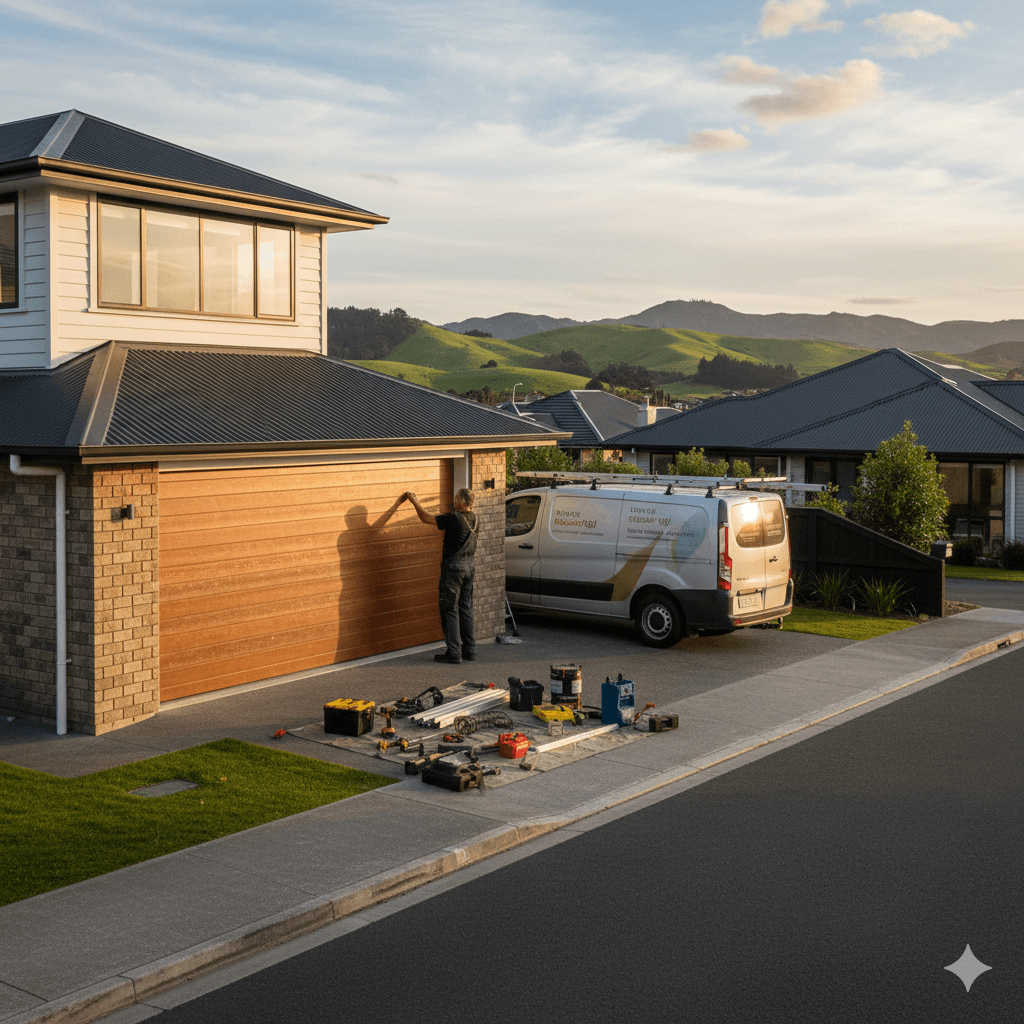
What's the Cost Difference Between Single and Double Garage Doors?
Double doors cost 40-60% more than single doors—not double the price.
Price Comparison by Door Type
|
Door Type
|
Single Door
|
Double Door
|
Price Increase
|
|
Basic roller
|
$1,500-$2,400
|
$2,200-$3,600
|
47%
|
|
Standard sectional
|
$2,500-$3,800
|
$3,800-$5,500
|
52%
|
|
Insulated sectional
|
$3,200-$4,500
|
$4,800-$6,800
|
50%
|
|
Glass/aluminium
|
$4,500-$7,000
|
$7,500-$12,000
|
67%
|
|
Custom timber
|
$6,500-$9,500
|
$10,000-$15,000
|
54%
|
Why Double Doors Don't Cost Double
Economies of scale:
- Installation labor increases minimally (same site visit, similar setup)
- Some components don't scale with size (opener, sensors, controls)
- Bulk material pricing reduces per-meter costs
What DOES scale with size:
- Raw materials (steel, aluminum, timber)
- Panel quantity
- Track length
- Spring strength (heavier springs cost more)
Standard Door Sizes
Single door typical dimensions:
- Width: 2.4m - 3.0m
- Height: 2.1m - 2.4m
- Most common: 2.7m × 2.1m
Double door typical dimensions:
- Width: 4.8m - 5.5m
- Height: 2.1m - 2.4m
- Most common: 5.4m × 2.1m
Custom sizes:
- Add 15-25% to base price
- Extra-wide (>6m) may require specialized hardware
- Extra-tall (>2.7m) requires high-lift tracks
How Much Does Insulation Add to the Total Cost?
Insulation significantly affects both upfront cost and long-term value.
Insulation Options and Pricing
Non-insulated doors (baseline)
- Single-skin steel or aluminum
- No thermal barrier
- Cheapest option
- Cost: Base price
Polystyrene insulation (+$400-$800)
- 30-40mm polystyrene foam inserted between skins
- R-value: ~1.5-2.0
- Most common insulation type
- Moderate noise reduction
- Cost: +$400-$600 (single), +$600-$800 (double)
Polyurethane insulation (+$600-$1,200)
- High-density foam injected between steel skins
- R-value: ~3.0-4.0
- Superior thermal performance
- Excellent noise dampening
- Adds structural rigidity
- Cost: +$600-$900 (single), +$900-$1,200 (double)
Double-skin with air gap (+$300-$500)
- Two steel layers with air space
- R-value: ~1.0-1.5
- Budget insulation option
- Some noise reduction
- Cost: +$300-$400 (single), +$400-$500 (double)
Insulation Value Comparison
|
Insulation Type
|
R-Value
|
Temp Difference*
|
Annual Energy Savings**
|
|
None
|
0.5
|
1-2°C
|
$0 (baseline)
|
|
Double-skin
|
1.0-1.5
|
3-4°C
|
$80-$120/year
|
|
Polystyrene
|
1.5-2.0
|
4-6°C
|
$150-$220/year
|
|
Polyurethane
|
3.0-4.0
|
7-10°C
|
$250-$350/year
|
*Temperature difference between garage and outside in winter
**Based on heated garage space, electricity at $0.30/kWh
When Insulation Makes Sense
High priority for:
- ✓ Garage used as workshop/living space
- ✓ Garage shares wall with main house
- ✓ Bedroom above garage
- ✓ Climate with temperature extremes
- ✓ Noise reduction important (street-facing)
- ✓ Long-term home ownership
Lower priority for:
- ✗ Unheated garage used only for storage/parking
- ✗ Standalone garage away from house
- ✗ Mild coastal climate
- ✗ Budget constraints
- ✗ Short-term ownership
ROI on Insulation Investment
Example calculation (double door, heated garage):
Polyurethane upgrade cost: $1,000
Annual energy savings: $300
Payback period: 3.3 years
20-year savings: $6,000 - $1,000 = $5,000 net benefit
Additional non-energy benefits:
- Increased comfort working in garage
- Protects stored items from temperature extremes
- Reduced condensation and rust
- Quieter operation
- Higher resale value
What Do Garage Door Openers Cost to Install?
Automation adds $600-$1,600 to total installation cost.
Opener Types and Pricing
Basic Chain/Belt Drive Opener
- Manual remote control only
- No smart features
- 5-year warranty typical
- Cost: $600-$900 installed
Mid-Range Smart Opener (Merlin Commander Elite)
- DC motor (ultra-quiet)
- Security+ 2.0 encryption
- Optional WiFi (requires hub)
- 7-year warranty
- Cost: $900-$1,200 installed
Premium Smart Opener (Merlin Commander Ultimate)
- Built-in WiFi/myQ
- Battery backup
- Smartphone control
- Voice assistant compatible
- 7-year warranty
- Cost: $1,200-$1,600 installed
Commercial/Heavy-Duty (Merlin Commander Extreme)
- High-cycle rating
- Extra lifting capacity
- All Ultimate features
- Designed for heavy/wide doors
- Cost: $1,500-$2,000 installed
Complete Automation Package Includes
Standard installation:
- Opener motor unit
- Rail and trolley assembly
- 2x remote controls
- Wireless wall control
- Safety photo-eye sensors
- Emergency release system
- Professional installation
- Programming and setup
Smart opener additions:
- WiFi connectivity
- myQ smartphone app access
- Voice control capability (Alexa/Google)
- Activity notifications
- Multiple user access
When to Upgrade Opener
Choose premium opener if:
- You use garage as primary entry (high daily cycles)
- Smart home integration desired
- Power outages are common (battery backup)
- Enhanced security features important
- Planning long-term ownership
Save with basic opener if:
- Budget constrained (can upgrade later)
- Garage used infrequently
- No interest in smart features
- Short-term ownership planned
What Are the Cheapest and Most Expensive Garage Door Options?
Budget-Friendly Complete Packages
Most affordable options:
- Basic Single Roller Door (Manual)
- Non-insulated steel roller door
- Manual operation (no opener)
- Standard white finish
- Total cost: $1,200-$1,800 installed
- Basic Single Sectional (Manual)
- Non-insulated steel sectional
- Manual operation
- Standard color
- Total cost: $1,500-$2,200 installed
- Basic Single Sectional (Automated)
- Non-insulated steel sectional
- Basic belt-drive opener
- 2 remotes included
- Total cost: $2,200-$3,200 installed
Mid-Range Popular Packages
Best value options:
- Insulated Single Sectional + Smart Opener
- Polystyrene insulated sectional
- Merlin Commander Elite
- Standard ColorSteel finish
- Total cost: $3,200-$4,500 installed
- Insulated Double Sectional + Smart Opener
- Polystyrene insulated sectional
- Merlin Commander Ultimate
- Battery backup included
- Total cost: $4,800-$6,800 installed
Premium Complete Packages
High-end residential options:
- Premium Insulated Double + Ultimate Automation
- Polyurethane insulated sectional
- Merlin Commander Ultimate
- Custom ColorSteel color
- Window inserts
- Total cost: $6,500-$8,500 installed
- Custom Timber Double + Premium Automation
- Cedar or ply & batten panels
- Merlin Commander Extreme
- Custom stain/finish
- Architectural hardware
- Total cost: $10,000-$15,000 installed
- Glass Aluminium Double + Ultimate Automation
- Full-view frosted glass panels
- Heavy-duty aluminum frame
- Merlin Commander Extreme
- Smart home integration
- Total cost: $12,000-$18,000+ installed
Price Comparison Summary
|
Package Type
|
Single Door
|
Double Door
|
|
Budget (manual)
|
$1,200-$2,200
|
$2,000-$3,500
|
|
Standard (automated)
|
$2,800-$4,200
|
$4,200-$6,000
|
|
Premium (insulated + smart)
|
$3,800-$5,500
|
$5,500-$8,500
|
|
Luxury (timber/glass)
|
$6,500-$12,000
|
$10,000-$18,000+
|
What Hidden Costs Should I Budget For?
Plan for 10-20% additional budget beyond base quote for unexpected expenses.
Common Additional Costs
Structural work:
- Lintel repair/replacement: $300-$800
- Frame reinforcement: $200-$500
- Ceiling joist strengthening: $400-$1,200
- Wall patching/repair: $150-$400
Electrical requirements:
- New power outlet installation: $150-$300
- Electrical upgrade (if needed): $300-$800
- External keypad wiring: $100-$200
- Smart home hub installation: $80-$150
Access and site conditions:
- Difficult access surcharge: $100-$300
- Weekend/after-hours install: $200-$400
- Multi-story/scaffolding required: $300-$700
- Rural/remote location fee: $50-$150
Finishing work:
- Timber door painting/staining: $400-$900
- Custom color upgrade: $150-$300
- Weather seal replacement: $50-$120
- Track guards (child safety): $80-$150
Disposal and cleanup:
- Old door removal/disposal: $100-$250
- Additional debris removal: $50-$150
- Site cleaning (extensive): $100-$200
Building Consent Fees
When consent is required:
- Structural alterations to opening
- Load-bearing wall modifications
- New garage construction
- Door size increase requiring header changes
Consent costs:
- Council application fee: $200-$350
- Engineer's report (if needed): $400-$800
- Inspection fees: $150-$300
- Total consent process: $750-$1,450
Not required for:
- Like-for-like door replacement (same size/type)
- Basic repair work
- Opener installation only
- Cosmetic modifications
Unexpected Issues During Installation
Common surprises that add costs:
Rotten timber frame ($300-$1,000)
- Problem: Decay in wooden header or jambs
- Solution: Replace affected timber before installation
Inadequate clearance ($200-$800)
- Problem: Insufficient ceiling height or side room
- Solution: High-lift kit or different door type
Uneven floor ($200-$600)
- Problem: Door won't seal properly
- Solution: Concrete grinding or custom bottom seal
Asbestos discovery ($800-$2,500)
- Problem: Old door contains asbestos
- Solution: Specialist removal required (legal requirement)
Damaged springs/hardware ($150-$400)
- Problem: Existing springs corroded beyond use
- Solution: Complete spring system replacement
Budgeting Strategy
Create three-tier budget:
- Base quote: Installer's written estimate
- Realistic budget: Base + 15% contingency
- Maximum budget: Base + 25% for worst-case
Example:
- Base quote: $4,500
- Realistic budget: $5,175 (allows for minor issues)
- Maximum budget: $5,625 (covers major surprises)
How Long Does Garage Door Installation Take?
Standard Installation Timeframes
New installation (no existing door):
- Single door: 4-6 hours
- Double door: 6-8 hours
- Custom/complex: 8-12 hours
Replacement installation:
- Single door: 3-5 hours (includes removal)
- Double door: 5-7 hours
- Custom/complex: 7-10 hours
Installation Process Breakdown
Hour 1-2: Preparation and Removal
- Site preparation and safety setup
- Removal of old door (if applicable)
- Disposal of old materials
- Inspection of opening and frame
Hour 2-4: New Door Installation
- Track installation and leveling
- Panel assembly and placement
- Spring installation and tensioning
- Hardware installation (rollers, hinges, handles)
Hour 4-5: Opener Installation (if applicable)
- Mounting opener to ceiling
- Rail assembly and connection
- Sensor installation and alignment
- Wiring and power connection
Hour 5-6: Testing and Adjustment
- Door balance verification
- Opener force adjustment
- Safety feature testing
- Remote programming
- User instruction
Factors That Extend Installation Time
Add 1-2 hours for:
- High-lift or custom track configurations
- Difficult access (narrow driveways, limited workspace)
- Structural repairs needed
- Custom color/finish requiring on-site work
- Multiple opener programming (>2 remotes)
Add 2-4 hours for:
- Major structural modifications
- Electrical work required
- Severe weather conditions (work stoppages)
- Discovery of asbestos or other hazards
- Multiple door installation (efficiency improves after first)
Multi-Day Installations
When installation spans multiple days:
- Custom timber doors (fabrication + installation)
- Extensive structural repairs required
- High-lift or specialty configurations
- Commercial/architectural projects
- Weather delays (timber staining must be dry)
Typical schedule:
- Day 1: Removal of old door, frame prep
- Day 2-3: Custom door fabrication (off-site)
- Day 4: Installation of new door
- Day 5: Finishing work, staining, final adjustments
Can I Install a Garage Door Myself to Save Money?
DIY installation can save $800-$1,500 in labor but comes with significant risks.
DIY Viability by Door Type
NOT recommended for DIY:
- ✗ Torsion spring systems (extremely dangerous)
- ✗ Heavy timber doors (>100kg, requires 3+ people)
- ✗ High-lift or custom configurations
- ✗ Glass/aluminium doors (precision required)
- ✗ Any door if you lack mechanical experience
Possible for experienced DIYers:
- △ Roller doors with extension springs
- △ Basic sectional doors (lightweight, standard height)
- △ Tilt doors (simpler mechanism)
Safer DIY projects:
- ✓ Garage door opener installation (on existing door)
- ✓ Door panel replacement (individual sections)
- ✓ Hardware upgrades (handles, locks, seals)
Risks of DIY Installation
Safety hazards:
- Spring injuries: Torsion springs store 200-400kg of force. Release during installation can cause:
- Broken bones
- Severe lacerations
- Facial injuries
- Fatalities (3-5 per year in NZ)
- Door collapse: Improperly secured doors can:
- Fall on installer
- Damage vehicles or property
- Injure family members during later use
- Electrical hazards: Opener installation involves:
- Working near power lines
- Electrical connections
- Risk of shock or fire
Financial risks:
- Warranty voidance (manufacturer may deny claims)
- Insurance complications (damage during DIY work may not be covered)
- Property damage (incorrectly installed door damages vehicle/home)
- Costly repairs (fixing DIY mistakes often costs more than professional install)
- Poor resale value (buyers wary of DIY installations)
What DIY Actually Saves
Labor cost savings:
- Professional installation: $800-$1,500
- Your time investment: 12-20 hours (first door)
- Effective hourly rate: $40-$125/hour
Cost you DON'T save:
- Door materials (same whether DIY or pro)
- Tools (may need $200-$500 in specialized tools)
- Permits (still required if applicable)
- Mistakes (wrong measurements, damaged parts)
Hidden costs of DIY:
- Tool rental/purchase: $100-$300
- Helper compensation (need 2-3 people): $200-$400
- Potential damage repairs: $200-$1,000+
- Time off work: $400-$800
- Learning curve (researching, watching videos): 5-10 hours
Professional Installation Value
Why professional installation is worth it:
✓ Safety: Trained in spring handling, proper safety equipment
✓ Speed: 4-6 hours vs your 12-20 hours
✓ Warranty: Labor warranty (typically 1 year)
✓ Quality: Proper tensioning, alignment, adjustment
✓ Tools: No need to buy/rent specialized equipment
✓ Insurance: Professional liability coverage
✓ Building code: Compliance guaranteed
✓ Troubleshooting: Experience solving unexpected issues
If You Insist on DIY
Absolute requirements:
- Watch multiple installation videos (door-specific)
- Read manufacturer instructions completely
- Have 2-3 physically capable helpers
- Buy/rent all proper tools (winding bars, level, drill, etc.)
- Start early (allow full day minimum)
- NEVER work alone with springs
- Consider hiring pro for spring installation only
Safer compromise: Partial DIY
- Hire pro for: Spring installation and balancing ($300-$500)
- DIY the rest: Track installation, panel assembly, opener
- Saves money while eliminating highest-risk component
How Do I Get an Accurate Installation Quote?
Information Needed for Accurate Quote
Measurements required:
- Opening width (inside frame to inside frame)
- Opening height (floor to bottom of header)
- Headroom (ceiling to top of opening)
- Side room (wall to nearest obstruction on each side)
- Depth (front of opening to back wall)
Existing door details:
- Current door type (sectional, roller, tilt)
- Approximate age
- Material (steel, timber, aluminum)
- Condition (fully functional, needs repair, non-functional)
- Opener type (if present)
Power and access:
- Power outlet location relative to door
- Internal garage access (yes/no)
- Driveway access (width, slope, obstructions)
Quote Request Checklist
Before contacting installer:
✓ Measure opening precisely (write down measurements)
✓ Take photos (front view, inside view, ceiling, both sides)
✓ Note desired features (insulation, windows, color, automation)
✓ Identify budget range
✓ Determine installation timeframe preference
✓ Check if building consent needed (ask council)
✓ List any special requirements (noise reduction, pet access, etc.)
What a Good Quote Should Include
Itemized breakdown:
- Door type, size, and specifications
- Material and gauge (steel thickness)
- Insulation type and R-value
- Color/finish
- Hardware included (handles, locks, springs, tracks)
- Opener model and features
- Installation labor
- Removal of existing door
- Disposal fees
- Warranty terms (parts and labor)
- GST
What's excluded:
- Potential additional costs (structural work, electrical)
- Delivery timeframe
- Consent fees (if applicable)
- Optional upgrades and their costs
Comparing Quotes
Get 3-4 quotes for comparison:
Red flags:
- ✗ Quote significantly lower than others (corners being cut?)
- ✗ No itemization (can't see what you're paying for)
- ✗ Pressure to decide immediately
- ✗ No written warranty information
- ✗ No insurance/licensing verification available
- ✗ "Cash only" or avoid GST suggestions
Green flags:
- ✓ Detailed written quote with specifications
- ✓ Clear warranty terms
- ✓ Realistic timeframes
- ✓ Professional communication
- ✓ References or reviews available
- ✓ Licensed and insured
- ✓ Willing to answer questions
Questions to Ask Installers
Before hiring:
- How long have you been installing garage doors?
- Are you licensed and insured?
- Can you provide recent references?
- What's the full warranty (parts and labor)?
- What happens if issues arise after installation?
- Do you handle building consents (if needed)?
- What's the expected installation timeframe?
- Do you offer financing options?
- What brands do you recommend and why?
- What maintenance will be required?
What Affects Installation Costs in Different Areas?
Urban vs Rural Pricing
Major metro areas (central suburbs):
- Standard rates
- High competition = better pricing
- Quick service availability
- Multiple installer options
Outer suburbs (20-40km from city):
- May add $50-$150 travel charge
- Fewer installers service these areas
- Slightly longer wait times
Rural locations (40km+ from city):
- Travel charges: $100-$300
- Limited installer options
- Longer lead times (2-4 weeks typical)
- May need to arrange accommodation for multi-day jobs
Coastal vs Inland Considerations
Coastal properties (within 2km of ocean):
- Require marine-grade materials:
- Stainless steel hardware: +$150-$300
- Powder-coated/galvanized springs: +$100-$200
- Specialized weather seals: +$80-$150
- Total coastal upgrade: +$330-$650
- Why necessary: Salt air causes rapid corrosion without protection
Inland properties:
- Standard materials sufficient
- Longer hardware lifespan
- Lower long-term maintenance costs
Regional Cost Variations
Typical pricing by region:
|
Region
|
Cost Comparison
|
Notes
|
|
Auckland Central
|
Baseline (100%)
|
Highest competition, standard rates
|
|
Wellington
|
+5-10%
|
Higher labor rates, limited access
|
|
Christchurch
|
-5-10%
|
Lower labor costs, good competition
|
|
Hamilton/Tauranga
|
Similar to Auckland
|
Growing markets, competitive
|
|
Provincial cities
|
-10-15%
|
Lower overhead, less competition
|
|
Rural areas
|
+10-20% (travel)
|
Travel time, limited service
|
Access and Site Difficulty
Additional charges for:
- Narrow driveway (<3m width): +$100-$200
- Steep slope driveway: +$100-$250
- No vehicle access to garage: +$200-$400
- Multi-story/scaffolding needed: +$300-$700
- Limited working space: +$100-$200
Is Financing Available for Garage Door Installation?
Financing Options
- Interest-Free Terms (Most Popular)
- 6-12 months interest-free
- Approval within hours
- Minimum purchase: $1,000-$2,000
- Available through: Gem Visa, Q Card, Genoapay
- No fees if paid within term
Example:
- $5,000 door installation
- 12 months interest-free
- Pay $417/month for 12 months
- $0 interest if paid on time
- Personal Loans
- Banks and credit unions
- 2-5 year terms typical
- Interest rates: 7-15% (depending on credit)
- Lower monthly payments but pay more overall interest
- Home Equity Loan/Line of Credit
- Leverage home equity
- Lower interest rates (6-9%)
- Longer terms available (up to 15 years)
- Good for major renovations including garage door
- Credit Card
- Only for smaller projects (<$3,000)
- Use rewards/points cards
- High interest if not paid quickly
- Not recommended for larger installations
- Save and Pay Cash
- No interest or fees
- May negotiate better price (cash discount)
- Delay installation but save money
- Best long-term value
Rent-to-Own (Caution Advised)
How it works:
- Weekly payments over 2-3 years
- No upfront cost or credit check
- Own the door after all payments
The catch:
- Total cost: 150-250% of retail price
- Hidden fees and charges
- Miss payment = lose door + all payments made
- Generally not recommended
Government Assistance
Home insulation grants:
- EECA Warmer Kiwi Homes program
- May partially fund insulated garage doors
- Available to low-income homeowners
- Apply through approved installers
Council home improvement schemes:
- Some councils offer low-interest loans
- For energy efficiency upgrades
- Check with local council for availability
Frequently Asked Questions
How long does a garage door last?
Quality garage doors last 15-30 years depending on material and maintenance. Steel sectional doors with proper maintenance typically last 20-25 years. Timber doors require more maintenance but can last 25-30+ years. Roller doors typically last 15-20 years. Springs wear out every 7-10 years and openers every 12-15 years, but these are replaceable components.
Do I need a building consent for garage door replacement?
Usually not for like-for-like replacement (same size and type). Consent IS required if you're: enlarging the opening, changing from one door type to another requiring structural modifications, altering load-bearing structures, or building a new garage. Check with your local council for confirmation—consent processes vary slightly by region.
Can I claim garage door installation on insurance?
Typically only if damage caused by an insured event (storm, vehicle impact, burglary). Normal wear and tear or replacement due to age isn't covered. However, if a storm damages your door, insurance should cover repair/replacement (minus excess). Check your policy and photograph any damage before starting work.
Will a new garage door increase my home's value?
Yes—garage door replacement offers 80-90% ROI according to NZ real estate data. A new, modern garage door improves curb appeal significantly. Particularly valuable in Auckland suburbs where garage is primary entry point. High-end timber or glass doors add more value to premium properties. Smart automation appeals to tech-savvy buyers.
How much does it cost to automate an existing manual door?
$800-$1,400 depending on door type and opener quality. Includes opener installation, programming, and safety sensor setup. Tilt doors may cost $200-$400 more due to specialized hardware required. Some very old or damaged doors may not be suitable for automation (springs too weak, door imbalanced).
Can I paint or stain a garage door after installation?
Steel doors: Can be painted but voids powder-coat warranty. Best to order in desired color. Timber doors: Supplied primed or with base coat—must be stained/painted for weather protection. Most installers recommend waiting 2-4 weeks after installation before final finish to allow door to settle.
What maintenance does a new garage door need?
Quarterly visual inspection and lubrication of moving parts (springs, rollers, hinges). Annual professional service recommended ($120-$180). Test safety reverse monthly. Clean tracks and sensors as needed. Coastal properties should rinse salt buildup monthly. Timber doors require re-staining every 2-3 years. Following manufacturer's maintenance schedule preserves warranty.
Do garage doors come in different colors?
Yes—extensive ColorSteel range (23+ colors) available for steel doors. Custom colors possible but add 2-3 weeks lead time and $200-$400 to cost. Aluminum doors offer powder-coat color options. Timber doors can be stained any color but supplied primed for your painter to finish. Most popular: Ironsand, Titania (white), Karaka (black).
Get Your Accurate Garage Door Installation Quote
Ready to invest in a new garage door? The Garage Door Company provides transparent, itemized quotes with no hidden surprises.
What you'll receive: ✓ Free on-site measurement and assessment
✓ Detailed written quote with specifications
✓ Material and color samples
✓ Honest assessment of your existing door/frame
✓ Building consent guidance (if applicable)
✓ Financing options explained
✓ Expected installation timeline
✓ No-obligation quote (no pressure sales)
Why choose The Garage Door Company:
- 30+ years combined experience
- Full insurance and licensing
- Comprehensive warranties
- 5-star customer reviews
- Servicing greater Auckland region
- Same-week installation available
- Transparent pricing—no surprises
Servicing East Auckland, Manukau, and all surrounding areas
📞 Call 021 764 609 for free quote
📧 Email: info.doorcompany@gmail.com
📍 B1/417 East Tamaki Road, East Tamaki, Auckland 2013
Summary: Garage Door Installation Cost Guide
Quick Reference Costs:
|
Door Type
|
Single
|
Double
|
|
Budget (basic, manual)
|
$1,200-$2,200
|
$2,000-$3,500
|
|
Standard (insulated, automated)
|
$2,800-$4,500
|
$4,200-$6,500
|
|
Premium (high-spec, smart)
|
$3,800-$6,000
|
$5,500-$9,000
|
|
Luxury (timber/glass)
|
$6,500-$12,000
|
$10,000-$18,000+
|
Key cost factors:
- Door type (sectional most popular, roller cheapest)
- Size (double doors ~50% more than single)
- Insulation (adds $400-$1,200, saves long-term energy)
- Automation (adds $600-$1,600, essential for convenience)
- Materials (steel budget, timber/glass premium)
- Location (coastal needs marine-grade, rural adds travel fees)
Budget wisely:
- Add 15-20% contingency for unexpected costs
- Consider total cost of ownership (energy, maintenance)
- Insulation ROI: 3-5 years in heated spaces
- Professional installation worth the investment for safety
Best value combinations:
- Single door: Insulated sectional + Merlin Elite ($3,200-$4,200)
- Double door: Insulated sectional + Merlin Ultimate ($4,800-$6,500)
- Both offer excellent features without overspending